Design has become a top reason guests pick one Chinese restaurant over another and return again. Atmospherics research shows dining environments shape emotions, perceived value, and satisfaction well beyond what's on the plate, which is exactly why "cultural luxury" positioning is replacing theme-park decor. Studies on dining atmospherics confirm the room itself is doing real work on guest behavior.
This guide breaks down 10 defining Chinese restaurant interior styles for 2026, how to choose the right one, and the mistakes that sink otherwise great concepts.
Key Takeaways
- Chinese restaurant design now spans Neo-Chinese minimalism to Chinoiserie maximalism, beyond old ethnic-dining clichés.
- Choose style by service model, not trend, whether quick-casual, family-style, banquet, or lounge.
- Acoustic comfort, lighting quality, and material authenticity directly affect spend and dwell time.
- An integrated design-to-installation partner prevents mismatched vendors, delayed shipments, and inaccurate renderings.
What Is Chinese Restaurant Interior Design and Why It Matters in 2026
Chinese restaurant interior design is the deliberate use of layout, materials, color, lighting, and cultural symbolism to shape how guests experience a concept, whether it's a takeout counter or a banquet hall built for six-course celebrations.
Design now functions as a primary patronage driver, shaping guest spending and return visits independent of food quality. Atmospherics research demonstrates that dining environments influence perceived value and revisit intent directly. Dining atmospherics research frames ambiance as a genuine behavioral lever, and that principle applies squarely to Chinese concepts competing for repeat visits.
Poor execution carries real cost. Generic dragon murals, mismatched furniture finishes, and weak acoustics create guest fatigue fast. The result:
- Lower average checks as guests rush through meals in uncomfortable rooms
- Brand dilution when the space reads as a cliché rather than a distinct identity
- Reduced repeat visits, since diners associate the space with "loud" or "dated" rather than "memorable"
The restaurants that select a distinct style and execute it consistently, from tableware to lighting temperature, are the ones that turn one-time visitors into regulars.
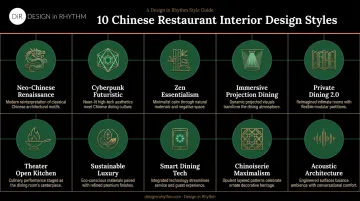
10 Chinese Restaurant Interior Design Styles for 2026
These 10 directions span heritage-forward minimalism to bold maximalism. Most successful restaurants commit to one primary style rather than blending several, since visual coherence is what makes a space feel intentional instead of assembled.
Neo-Chinese Renaissance (Modern Heritage)
Neo-Chinese design fuses traditional Chinese proportion, symmetry, and symbolism with minimalist, contemporary materials. Think solid wood, stone-like surfaces, and brass accents instead of literal ornamentation.
A 2024 semiotics framework formally describes this approach: Neo-Chinese interior design translates cultural signs rather than copying them outright. Instead of a painted dragon, you get relief textures suggesting scales. Instead of red lanterns, ink-inspired pendant lighting.
- Best suited for upscale, destination-style restaurants targeting business diners and culturally literate guests
- Precedent projects like The Tang in New York use black plaster, steel, and herringbone brick referencing Chinese alleyways rather than stereotypical motifs
Cyberpunk and Futuristic Asian Aesthetics
This look pulls from Hong Kong and Tokyo streetscapes: neon-lit, tech-forward, built on programmable lighting and exposed concrete. Hong Kong's own neon heritage, dating back to the 1920s, has directly inspired films like Blade Runner, and that same visual language now shows up on restaurant walls.
Best suited for:
- Late-night dining
- Gen Z-focused concepts
- Cocktail-forward, social-first venues
One caution: hard surfaces like exposed concrete and steel amplify sound. Without acoustic treatment layered in from the start, guest fatigue sets in fast, no matter how good the lighting looks.
Zen Essentialism and Wabi-Sabi
Zen essentialism embraces imperfection through lime wash, clay plaster, natural stone, and biophilic touches like moss walls or bonsai. It's a tranquil counterpoint to the neon and lacquer styles above.
Biophilic design research backs the psychological upside here. A study of 500 US participants found that biophilic elements in a hotel lobby increased pleasure and willingness to pay, even though that study focused on hospitality lobbies, not restaurants specifically.
- Suits tea-focused, wellness-oriented, and slow-dining concepts
- Supports premium pricing through a restorative guest experience, especially for concepts pairing food with ritual, like formal tea service
Immersive and Projection-Mapped Dining
Projection mapping turns tables and walls into moving visual narratives, a form of "eatertainment." Dubai's Krasota pairs an eight-course meal with AI-generated projections, with tickets starting around AED 1,200 (roughly $326).
- Best for tourist-heavy, special-occasion, or ticketed-event formats
- Higher upfront investment, offset by premium event pricing rather than everyday table turns
- Not suited for high-volume, quick-turnover concepts
The Private Dining Room (PDR) 2.0
Modern PDRs function as a restaurant within a restaurant: real acoustic isolation, dedicated service stations, and their own distinct micro-environment identity, not just a curtain pulled across a corner.
Demand backs this up. OpenTable reports group dining for six or more rose 11% year-over-year in 2025, with 36% of Americans wanting more private and group dining options in 2026.
Best suited for:
- Corporate bookings
- Multi-generational family celebrations
- Banquet-style Chinese dining, where shared dishes and larger parties are already the norm
This is consistently one of the highest-ROI investments for Chinese restaurants, since PDRs command premium minimums while reusing existing kitchen infrastructure.
The "Theater" Open Kitchen
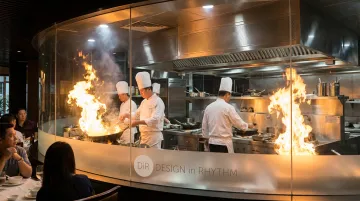
Glass-partitioned, wok-forward kitchens turn cooking into visible performance. Guests watch flames leap and woks toss, building trust in traditional technique. Junzi Kitchen's modern Chinese fast-casual layout in New York is a working example of production made visible.
The tradeoff is real engineering. Commercial cooking effluent creates genuine health, hygiene, and fire risks that require proper ventilation systems (NFPA 96 compliance is non-negotiable here). Cleanliness and equipment aesthetics also need constant management since every scratch and grease mark is on display.
Sustainable Luxury and Eco-Materiality
This isn't a standalone look so much as a materials strategy layered into Neo-Chinese or Zen concepts. Engineered natural materials, reclaimed wood, and circular upholstery deliver warmth without the environmental footprint of virgin materials.
- Consumer research shows sustainability commands real premiums, with surveyed diners willing to pay an average 20% more for sustainable choices (though this research centers on meals, not finishes specifically)
- Appeals strongly to sustainability-conscious diners, particularly younger demographics
- Works best paired with another primary style rather than standing alone
Smart Dining Integration (Invisible Tech)
Embedded technology—wireless charging, digital menus, sensor-based service cues—removes friction without disrupting hospitality. The goal is invisible convenience, not a tablet shoved in every guest's face.
National Restaurant Association research found Gen Z, millennials, and Gen X all rate tableside ordering and payment technology highly. But here's the catch:
- Cabling and charging surfaces must be built into furniture specification early
- Retrofitting after installation almost always looks bolted-on
- Best suited for high-volume or explicitly tech-forward concepts
Chinoiserie 2.0 (Bold Maximalism)
Oversized floral wallpaper, high-gloss lacquer, jewel-toned upholstery. This is the vibrant, pattern-heavy look built for social sharing and photo-worthy moments.
- Best suited for cocktail lounges, dim sum brunch concepts, and social-first dining
- "Vibe" here directly drives beverage and small-plate sales
- Note: broad Chinoiserie resurgence in restaurants specifically isn't yet independently verified across the industry, though it does appear in 2026 luxury interior forecasts more broadly
Acoustic Architecture (Soundscaping)
Acoustics function as a foundational layer, not decoration. That means disguised absorption panels, zoned or directional audio, and flooring choices that manage reverberation, all specified before furniture goes in.
The research here is genuinely mixed, and worth stating plainly. A Harbin study found acoustic comfort correlated strongly with overall dining evaluation. A Montreal field study of 247 diners, though, found higher ambient sound linked to more time and money spent, with no effect on perceived quality. The honest takeaway: comfortable acoustics matter for satisfaction, but "quieter always wins" isn't supported.
This principle applies across all nine styles above. Neon-lit cyberpunk rooms need it as much as Zen tea rooms.
How to Choose the Right Style for Your Chinese Restaurant
The right style follows your service model and guest experience goals, not what's trending on design blogs this quarter.
Key factors to weigh:
- Service model and dining duration: Quick-casual needs durable, easy-clean surfaces; multi-hour banquet dining needs acoustic isolation and generous table spacing
- Target guest demographic: Families need round tables and lazy Susans; Gen Z nightlife crowds want cyberpunk energy and cocktail-forward layouts
- **Budget tier and renovation scope**: A light refresh supports a Zen materials update; a full structural gut is required for glass-partitioned open kitchens
- Long-term flexibility: Can seating zones adapt if you add a private dining room (PDR) or expand banquet capacity later?
A quick-casual dim sum counter chasing Chinoiserie maximalism will feel mismatched fast. A fine-dining destination restaurant leaning cyberpunk risks alienating the business-diner crowd it needs for weekday revenue.
Common Mistakes to Avoid When Designing a Chinese Restaurant
Relying on outdated stereotypes. Generic dragon murals and red-and-gold clichés read as dated the moment guests walk in. The Neo-Chinese shift toward authentic materials and refined symbolism exists precisely because diners now expect more than a costume-shop version of "Chinese."
Treating acoustics and lighting as afterthoughts. Acoustics and lighting are core design layers, directly affecting guest comfort and spend. Retrofitting sound absorption after opening costs more and rarely looks as clean as building it in from the start.
Sourcing from disconnected vendors. This is the mistake that derails the most projects. When furniture, lighting, and fixtures come from separate, uncoordinated vendors:
- Finishes arrive slightly mismatched (brass tones that don't match, wood stains that clash)
- Shipping delays stall installation while other trades wait
- The installed space doesn't match the renderings the owner approved months earlier
This is exactly why working with an integrated design-to-installation partner matters. At Design in Rhythm, we source every product before creating renderings, so the 3D visualization shows exactly what gets installed.
Procurement, logistics, and installation run through a single point of contact, so a Chinese restaurant client isn't juggling a furniture vendor, a lighting supplier, and a general contractor separately, hoping their timelines align. Everything ships staged and sequenced, so nothing arrives before the space is ready to receive it.
Conclusion
Chinese restaurant design in 2026 spans 10 distinct directions, from Neo-Chinese minimalism to Chinoiserie maximalism, each built for a different guest experience and service model. There's no single "correct" style, only the one that fits your concept.
Start with the dining concept and guest journey, not the decoration. Acoustic comfort and material authenticity now carry as much weight as visual theme, and skipping either creates a space that photographs well but doesn't hold up over years of service.
Whichever of these 10 styles fits your vision, translating it into a cohesive, on-brand space takes more than a mood board. Design in Rhythm handles design, procurement, and installation as one connected process, so you're not juggling vendors and contractors independently.
Frequently Asked Questions
What is the concept of Chinese interior design?
It centers on balance, symmetry, natural materials, and symbolism rooted in philosophies like feng shui. Today's interpretations range from traditional ornamentation to modern minimalist reinterpretations of those same principles.
How much does Chinese restaurant interior design cost?
Costs vary widely based on renovation scope, from a light cosmetic refresh to a full structural gut involving kitchen upgrades. Always validate local contractor bids before finalizing a budget, since regional labor and material costs shift estimates.
What are the rules for Chinese table setting?
Chinese dining favors shared dishes served on round tables, often with a lazy Susan to rotate food for easy access. Etiquette calls for rotating it gently, serving the eldest guest first, and taking food nearest to you rather than reaching across.
What colors are best for a Chinese restaurant interior?
Red, gold, and black remain traditional anchors tied to prosperity and celebration. 2026 designs increasingly favor muted, natural palettes with subtle accent colors for a more refined, contemporary look.
Do I need a professional designer for a Chinese restaurant renovation?
Professional design aligns aesthetics with operational needs like kitchen ventilation, acoustics, and seating flow. Full-service firms, such as Design in Rhythm, combine design with procurement and installation to help you avoid that costly rework.
How long does a Chinese restaurant interior renovation typically take?
Timelines depend heavily on scope, ranging from a few months for a light refresh to a year or more for a full structural remodel involving kitchen systems. Permit review timelines alone can range from two weeks to several months depending on your city.