Developers, investors, and homeowners are treating interior design as a value-driver, not a finishing touch you add after the paint dries. A gorgeous floor plan in a great neighborhood can still underperform if the interior feels generic, cluttered, or disconnected from who's actually going to live in it.
That's the pain point: real estate decisions made without design input — buying, building, renovating, listing — often underperform on return on investment, speed of sale, or day-to-day livability. Skip the design conversation early, and you pay for it later in change orders, slow showings, or a property that never quite clicks with buyers.
This article breaks down six proven ways real estate and interior design intersect, plus the mistakes that trip up developers and homeowners when they try to combine the two.
Key Takeaways
- Interior design directly shapes a property's value, appeal, and final price.
- This intersection differs across residential, hospitality, and commercial spaces.
- Involving designers early outperforms treating design as an afterthought.
- One integrated design-procurement-logistics team removes typical coordination burdens.
How Are Real Estate and Interior Design Connected?
Think of it as canvas and art. Real estate is the canvas: location, structure, square footage, market value. Interior design is the art: how a space functions and how it makes someone feel the moment they walk in. Neither one hits full potential without the other.
That "art" side of the equation shows up clearly in buyer behavior: people decide with emotion first, logic second. According to the National Association of Realtors' 2025 Profile of Home Staging report, 49% of sellers' agents said staging reduced a home's time on market. Separately, 83% of buyers' agents said staging made it easier for buyers to picture themselves living there. That's the emotional lever design pulls.
Design Early, Not Late
Developers and investors who bring designers in during planning, not after construction, avoid costly rework. Finishes get aligned with the target buyer or guest profile from day one instead of getting retrofitted once the framing is already up.
Sustainable and high-quality materials matter more here too. Buyer awareness of energy savings and eco-conscious finishes is climbing, and it's increasingly a factor agents flag when discussing what drives demand for a property.
At Design in Rhythm, this philosophy shows up in a simple idea: every space should reflect a client's story and rhythm. That thinking is what turns a real estate transaction into something with lasting value, whether it's a family home or a 40-unit development.

Six Ways to Combine Real Estate With Interior Design
How this intersection plays out depends heavily on the property type and the goal behind it. What works for a personal home doesn't work for a boutique hotel or a spec development. Here's how it breaks down.
1. Full Home Remodels for Long-Term Living and Equity
A full remodel done with design intent boosts both daily livability and resale equity. Piecemeal updates (a new backsplash here, a repainted room there) rarely add up to the same value.
- Homeowners get the best results when design is built around how they actually live, not a trend pulled from a magazine.
- A family with young kids needs different durability and layout decisions than empty nesters planning to age in place.
- The strongest remodels start with a discovery conversation about lifestyle, not a mood board.
2. Boutique Hotel and Hospitality Design
In hospitality, design shapes guest perception and spending from the second someone walks through the lobby doors. It directly affects nightly rate and whether guests come back.
The financial stakes are real. CoStar's analysis of a hotel renovation found that after a $9 million property-wide renovation, annual net operating income ran roughly 33% higher in the following year compared to before the work was completed.
Design in Rhythm's founder, Jon Wheat, spent over a decade designing boutique hotel environments before founding the firm, work that included properties like the Magic Castle Hotel in Hollywood. That kind of hands-on hospitality experience is what supports a hotel brand's positioning, not just its aesthetics.
3. Restaurants and Bars
Atmosphere and layout in food and beverage spaces influence how long guests stay, how much they spend, and whether they return. A restaurant's real estate location and its interior identity have to work together, not separately.
Design in Rhythm's restaurant and bar portfolio shows how differently this plays out by concept:
- Dragonfly (Hollywood) leans moody and intimate, with dark tones and chandeliers built for upscale nightlife.
- St Felix (Las Vegas) uses bold Sin City branding and multi-zone storytelling to match its market.
- Arclight Theater Bar (Boston) goes light and airy, built for a daytime, theater-adjacent crowd.
Same service offering, three completely different identities, because the location and target guest demanded it.
4. Short-Term Rentals and Vacation Properties
Design-forward short-term rentals stand out in a crowded listing market and can command higher nightly rates. AirDNA's data on unique vacation rentals found they generated 13% higher RevPAR than traditional rentals ($148 versus $131), thanks largely to differentiated, memorable interiors.
Owners in this space need more than aesthetics, though. Turnover is constant, so:
- Fabrics and finishes need to survive frequent guest cycling.
- Furniture layouts have to photograph well for listings and hold up in daily use.
- Designers who understand hospitality durability (not just residential taste) matter here.
5. New Developments and Spec Projects
Partnering with a design team from the ground up lets developers and architects build design-forward properties that sell faster than undifferentiated spec homes. This is where Design in Rhythm's work with developers and real estate groups, including Wood Partners on the Alta community and multifamily projects in Los Angeles and Long Beach, comes into play.
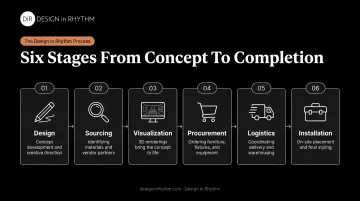
That work typically covers six connected stages: design, sourcing, visualization, procurement, logistics, and installation, applied consistently across model unit types so every unit tells a cohesive story while still fitting its specific floor plan.
6. Staging Existing Properties for Resale
Staging remains one of the fastest, cheapest ways to apply design thinking to a sale. It helps buyers emotionally connect with a space instead of imagining someone else's furniture in it.
Per NAR's 2025 data, sellers paid a median $1,500 for a professional staging service, and living rooms were staged in 91% of staged listings — the single most commonly staged room.
The key difference to remember: staging is temporary and sale-focused. Full interior design is permanent and built around long-term livability. That distinction matters for the next question every property owner eventually asks: how do you avoid the coordination mess that comes with either path?
Why an Integrated Design Team Maximizes Real Estate ROI
Coordinating vendors, contractors, and shipments separately is where most real estate design projects go sideways. One vendor is late, another substitutes a product without telling anyone, and suddenly the installed space doesn't match what was approved.
Design in Rhythm's model addresses this by sourcing every product before creating renderings. What a client sees on screen is exactly what gets installed — not a placeholder, not an approximation. That's backed by a decade-plus trade network of vendors, artisans, and custom furniture makers, the same relationships larger design firms rely on.
The other piece is accountability. A single point of contact stays with a project from concept through final walkthrough, managing:
- Contractors and trades
- Vendor orders and delivery timelines
- Installation sequencing and final styling
This reduces risk substantially for developers and homeowners who don't want to become part-time project managers. Design in Rhythm applies this model across its footprint in Los Angeles, Santa Barbara, Boston, Las Vegas, Washington DC, and New Jersey. These markets have very different buyer profiles, but they all share the same need: one team owning the outcome.
Common Mistakes to Avoid When Combining Real Estate and Design
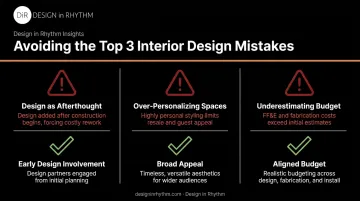
Even well-funded projects stumble here. Three mistakes show up repeatedly:
- Treating design as an afterthought. Bringing designers in after acquisition or after construction has started limits ROI and forces expensive late-stage changes.
- Over-personalizing spec homes or rentals. A designer's personal taste, or an overly niche theme, can narrow buyer or guest appeal instead of broadening it. Model units and rentals need to appeal to a range of people, not one imagined tenant.
- Underestimating the design and staging budget. Design and staging costs need to be sized relative to total project cost and expected value lift, not treated as a rounding error.
Involving a design team early, the way Design in Rhythm structures every hospitality and residential project, solves all three at once: it aligns budget expectations, keeps appeal broad, and prevents the rework that eats into margin.
Frequently Asked Questions
How are real estate and interior design connected?
Real estate covers structure, location, and market value, while interior design shapes function and emotional appeal. Together, they determine how a property performs, both financially and for the people living in it.
Does interior design really increase property value?
Well-executed design can lift both perceived and actual value. In 2025, 29% of NAR agents reported that staging alone increased offer value by 1%-10% over unstaged homes.
Should I hire an interior designer before or after buying a property?
Before, ideally. Involving a designer during the planning or acquisition phase helps buyers assess renovation potential and avoid expensive surprises after closing.
Can interior design help sell a home faster?
Yes. Staged and professionally designed homes consistently attract more buyer interest and spend less time on the market than cluttered or undesigned spaces.
What's the difference between staging and full interior design?
Staging is temporary and built specifically to sell a property. Full interior design is permanent, built around how someone actually lives, and typically far more comprehensive.
How much should I budget for interior design in a real estate project?
Budgets vary widely by project type, scope, and location, and there's no universal industry percentage. It's best to consult a design firm early so budget and expected value return are aligned from the start.