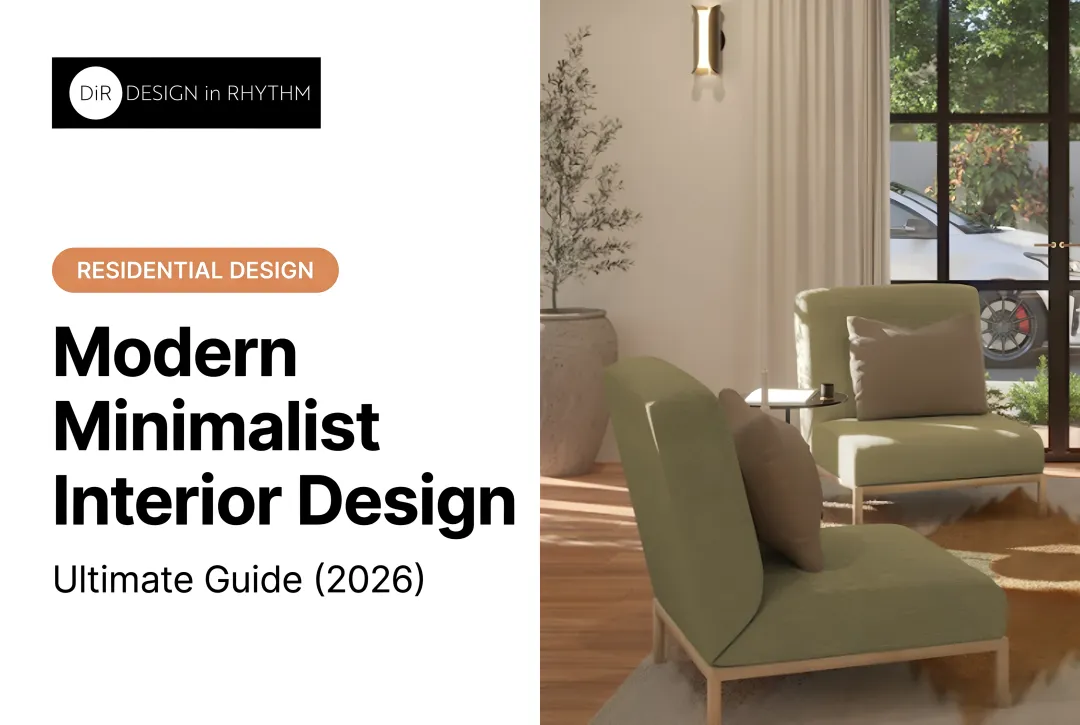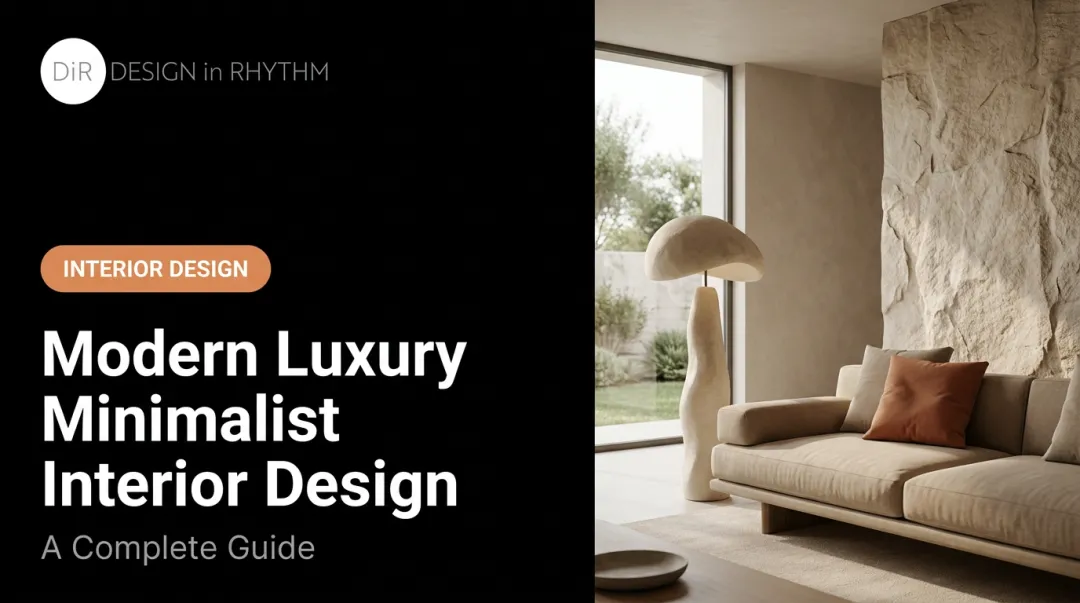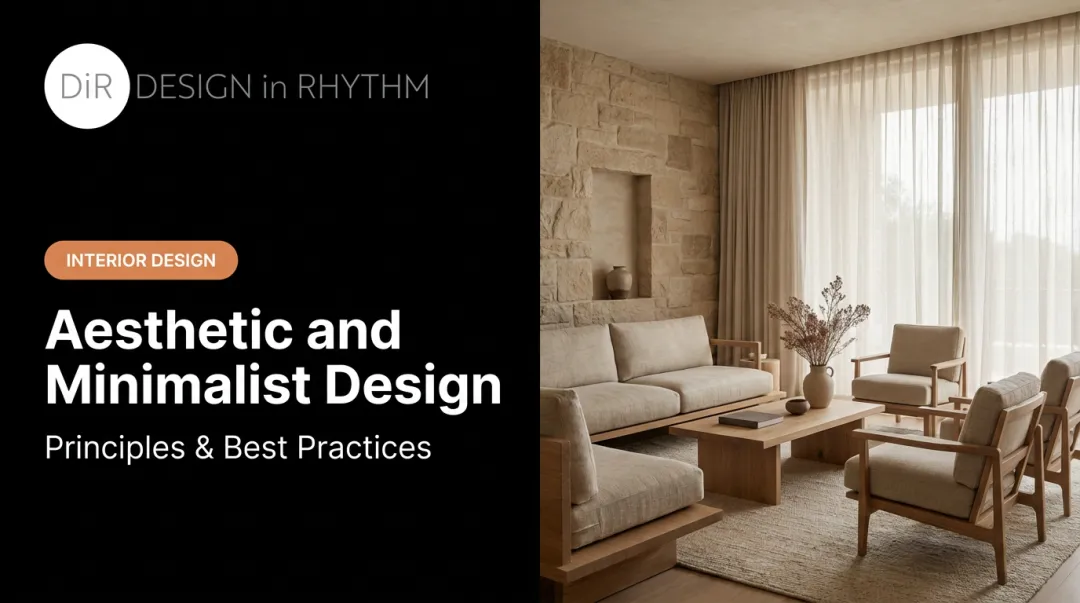
Introduction
Minimalist interior design gets misread constantly. People hear "minimalist" and picture bare white rooms, a single chair, maybe a succulent on a windowsill. Cold. Austere. Uninviting.
That's not minimalism. That's just empty.
Real minimalist design is one of the most intentional disciplines in the field. Every material is chosen with purpose, every piece of furniture earns its place, and silence in a room is treated as a design decision, not an oversight. The philosophy isn't about subtraction for its own sake — it's about keeping only what genuinely belongs.
Right now, minimalism is compelling for a specific reason: people are exhausted by visual noise. Homes have become busier, more cluttered, more overstimulating — and the desire for spaces that feel genuinely calm has never been stronger. The rise of warm minimalism — think natural linen, aged wood, and layered textures within restrained palettes — confirms the style isn't fading. It's evolving toward something you can actually live in.
That evolution is worth understanding. This guide covers the core principles, room-by-room ideas, current trends, how to avoid the cold-and-sterile trap, and the mistakes most people make when they try to pull it off.
Key Takeaways
- Minimalism is purposeful curation, not deprivation — negative space is an active design tool
- Natural materials (linen, oak, stone) add warmth without visual complexity
- Warm minimalism and Japandi are the dominant directions shaping the style right now
- One great piece always outperforms five mediocre ones in a pared-back space
- When a minimalist room feels cold, reach for texture — not more objects
What Is Minimalist Interior Design?
Minimalist interior design is rooted in the "less is more" philosophy — a phrase MoMA attributes to architect Mies van der Rohe, whose spatial work became the architectural blueprint for the movement. Its intellectual lineage runs through Bauhaus modernism (founded 1919), which the V&A describes as producing open interiors stripped of ornament, and Japanese Zen philosophy, where wabi-sabi — the appreciation of impermanence and simplicity — has long shaped how space is understood.
Architectural Digest defines minimalist interiors through four consistent characteristics:
- Clean, uncluttered lines
- Limited ornamentation
- Neutral color schemes
- Natural materials
The practical definition matters just as much: minimalism is intentional living, not simply owning less.
What Separates a Minimalist Room from an Empty One
This is the distinction most people miss. An empty room feels neglected. A minimalist room feels considered. The difference is that every element remaining in a minimalist space has passed a quiet test: does it earn its place aesthetically, functionally, or both?
Minimalism has also shaped — and been shaped by — adjacent styles like Scandinavian design, Japandi, and modern architecture. Each borrows from the same well of simplicity and restraint, but minimalism holds its own distinct position: restraint as a deliberate creative choice, not a byproduct of influence.
The Core Principles of Minimalist Interior Design
Clean Lines and Intentional Negative Space
Minimalist furniture and architectural details use unadorned geometric forms — no ornate curves, no decorative trim, no flourishes. These lines create visual rhythm, guiding the eye calmly through a room rather than snagging on details.
Equally important is what gets left out. Negative space — bare walls, open floor, unoccupied surfaces — isn't an oversight. It's an active design tool. Architectural Digest notes that negative space gives the eye somewhere to rest and allows selected objects to make a real statement. When surfaces compete for attention, nothing registers. Strip that away, and even a single well-placed object commands the room.
Functional Furniture with Purpose
Every piece must justify its presence. Minimalist interiors favor:
- Raised-leg furniture — even minimal clearance beneath a sofa or console keeps the floor sight line open, making the room read as larger and airier
- Multi-functional pieces — sofa beds, extendable dining tables, storage ottomans reduce the total number of items needed
- Custom sizing — furniture scaled precisely to the space, rather than off-the-shelf pieces that don't quite fit
At Design in Rhythm, custom furniture fabrication is part of the integrated service — pieces are designed to solve specific spatial and lifestyle problems, not just fill square footage. One documented client example involved a custom L-shaped sectional built to fit the room's proportions, complement outdoor views, and withstand kids and dogs simultaneously. That's minimalist thinking applied practically.
Quality Over Quantity
When ornamentation disappears, craftsmanship becomes the visual focus. Elle Decor describes this clearly: reductive design without ornament depends entirely on the beauty of form and materials — and any misalignment in joinery, finish, or proportion is immediately visible with nothing left to hide it.
A single beautifully crafted chair says more than five mediocre ones. The fewer pieces you keep, the more each one has to earn its place — which means quality directly determines whether the room works.
Tightly Edited Color Palette
That same discipline extends to color. Minimalist rooms favor monochromatic or near-monochromatic schemes — whites, beiges, soft grays, and black used sparingly. The goal isn't limitation; it's visual unity. Layering tints and shades of a single hue adds depth without introducing noise.
Minimalist Color Palettes and Materials That Work
Colors That Anchor a Minimalist Scheme
The foundation palette for minimalist interiors:
- Warm whites and off-whites — the true base of most minimalist rooms
- Beige, taupe, and sand — Architectural Digest identifies these as establishing a serene, minimalist mood
- Greige — WGSN calls it "the next big minimal hue," a beige-gray blend with a warmer undertone than conventional gray
- Black and deep charcoal — used sparingly in door frames, fixtures, or a single accent piece for depth and grounding
Tonal layering — moving from light to dark within the same hue — creates dimension without introducing new colors that fragment the visual field.
Materials That Belong
Texture is how minimalist spaces stay interesting. Within a neutral palette, contrast comes from surface variation, not color variation:
| Material | What It Adds |
|---|---|
| Linen | Warmth, softness, tactile depth |
| Raw oak or light wood | Natural warmth, visible grain |
| Stone or concrete | Weight, permanence, matte texture |
| Marble | Subtle pattern within restraint |
| Boucle or shearling | Tactile richness without visual noise |
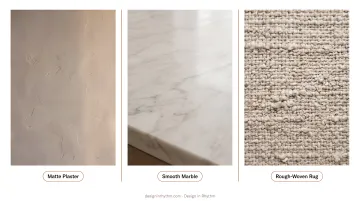
A matte plaster wall beside a smooth marble countertop beside a rough-woven rug — all within the same neutral palette — creates richness without complexity.
What to Avoid
- Heavily veined or ornate marble patterns
- Busy surface textures that compete visually
- Excessive shiny chrome, which reflects light in ways that break the room's calm
- Mismatched finishes across a single space
Material and color can be right individually — it's how they interact across a single space that determines whether the room holds together or falls apart.
Minimalist Design Ideas for Every Room
Living Room
Focus on three decisions:
- A low-profile sofa with clean upholstery in a neutral fabric — the room's primary anchor
- A wall-mounted or integrated media unit that eliminates the visual clutter of freestanding entertainment furniture
- One intentional decor statement — a single artwork or sculptural object rather than a scatter of accessories

In a well-executed minimalist living room, the architecture and natural light become primary design features. The room does the work.
Bedroom
The bed is the uncontested focal point. Choose a platform or floating-frame design without excessive headboard ornamentation, and flank it with streamlined nightstands (wall-mounted if possible) to keep the floor clear.
Layered textiles add warmth and sensory comfort without adding visual weight:
- Linen duvet in a neutral tone
- Textured throw in a tonal variation
- Two or three pillows, no decorative scatter
The bedroom should feel like a room where the mind actually quiets.
Kitchen
A minimalist kitchen lives or dies by its storage discipline. The hallmarks:
- Handleless or flush-front cabinetry (hardware breaks the visual plane)
- Concealed appliances where possible, or appliances grouped logically
- Continuous surface finishes with countertop and backsplash in the same or complementary material
Design in Rhythm's work on a Long Beach apartment kitchen illustrates this well: light wood cabinetry, a seamless white countertop, and appliances positioned as an orderly group rather than scattered across the space. Open shelving used selectively for plants and dishware balances accessible storage with warmth.
The only way to maintain a minimalist kitchen long-term is to design adequate hidden storage from the outset, not as an afterthought.
Hospitality and Commercial Spaces
In boutique hotel lobbies, restaurants, and bars, the first impression has to say everything before a guest says a word. Three elements carry that load:
- Material quality — the tactile honesty of stone, wood, or metal signals investment and intention
- Spatial proportion — generous negative space reads as deliberate, not sparse
- Lighting — contrast and warmth shape mood more reliably than any decorative layer
Minimalism in these contexts is never empty. It's precisely calibrated to produce a specific emotional response. One dominant visual anchor — a sculptural reception desk, a dramatic ceiling fixture, a single large-scale artwork — does more for brand identity than a room crowded with competing details.
How to Make Minimalism Feel Warm, Not Sterile
The most common failure in minimalist design isn't too much stuff — it's too little texture. Here's how to fix it:
Layer textures, not objects. Rough linen against smooth marble, matte plaster beside warm oak — or a woven rug on polished concrete — these contrasts create sensory richness within a neutral palette. The room becomes interesting through touch and surface, not accumulation.
Incorporate natural elements. Plants, abundant natural light, organic shapes, and natural materials prevent minimalist rooms from feeling clinical. A 2020 study published in Science of the Total Environment found that biophilic environments — those incorporating plants, natural materials, and daylight — produced measurably better stress-recovery responses compared to non-biophilic spaces. Nature provides visual warmth that reads as calm rather than chaotic.
Use art and lighting as intentional anchors. In a pared-back space, a single statement artwork or sculptural light fixture carries enormous visual weight. Choose these elements with care — they will be seen, studied, and felt far more in a minimalist room than they would in a busier one.
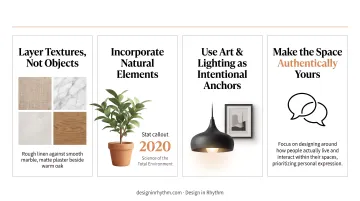
Make the space authentically yours. The most sterile minimalist rooms are the ones that look like showrooms — generic, impersonal, technically correct but emotionally empty. Design in Rhythm's process starts with a discovery conversation — uncovering how clients actually live, what their daily rhythm looks like, and what personal connections they have to color or material — before any aesthetic decisions are made. That's what separates a minimalist room with real meaning from one that merely looks the part.
Current Minimalist Interior Design Trends to Watch
Warm Minimalism
The dominant directional shift is away from cold, stark whites toward warmer neutrals — off-white, clay, sand, and greige — paired with tactile organic surfaces and soft curved forms. Architectural Digest's "white chocolate minimalism" trend report explicitly contrasts these softer palettes with the chilly grays and sterile-white walls associated with earlier minimalism.
The data supports this shift: WGSN reported that US Pinterest searches for "neutral room aesthetic" and "taupe bedroom" increased 20% and 19% year over year respectively from 2021 to 2022, linked directly to warmer, more livable minimal palettes.
Japandi
Japandi merges Japanese wabi-sabi philosophy with Scandinavian functionality — producing spaces that are minimal, handcrafted-feeling, and grounded in natural materials. Architectural Digest defines it as an East-meets-West movement combining Japanese artistic sensibility with Scandinavian hygge.
Key characteristics:
- Muted earth tones, brown and green rather than stark white
- Visible wood grain and rough-hewn reclaimed surfaces
- Handmade ceramics and functional objects over mass-produced pieces
- A quiet acceptance of imperfection — wabi-sabi values the worn edge over the flawless finish

Biophilic Minimalism
Natural elements — wood, stone, plants, and above all natural light — are becoming structural material choices rather than decorative additions. Biophilic design strengthens connection to nature through material choices, spatial features, and sensory elements — including natural light, sound, planted areas, and direct openings to the outdoors.
The approach goes well beyond aesthetics. Biophilic spaces are designed to actively support wellbeing, and peer-reviewed research consistently links nature-connected environments to lower cortisol levels and faster stress recovery. Minimalism's restraint makes this easier: fewer objects, more light, better air, cleaner sightlines.
Key biophilic elements showing up in minimal interiors:
- Natural light as a primary design material, not an afterthought
- Living walls or statement plants anchoring negative space
- Unfinished stone and raw wood used structurally, not decoratively
- Views to the outdoors treated as a design feature worth framing
Frequently Asked Questions
What is minimalist interior design?
Minimalist interior design is a style built on the "less is more" principle: clean lines, purposeful furniture, a restrained neutral palette, and intentional empty space that creates calm, uncluttered environments. Every element earns its place aesthetically and functionally — nothing is incidental.
What is the 3-5-7 rule in interior design?
The 3-5-7 rule groups objects in odd numbers (3, 5, or 7 items) to create visual balance and natural interest. In minimalist spaces, this principle ensures curated groupings feel considered rather than sparse.
Is minimalist interior design still popular?
Yes — 34% of designers surveyed by 1stDibs selected minimalism among expected popular styles for 2024, and WGSN confirms it remains a key trend in home design. The style has evolved toward warmer, more livable interpretations rather than the stark aesthetic of earlier decades.
What is the difference between minimalist and Scandinavian interior design?
Scandinavian design is a warmth-forward subset of minimalism, emphasizing hygge (coziness), light wood, natural textiles, and functional simplicity. Broader minimalism spans a wider range — from stark and architectural to warm and textural — and often incorporates materials like stainless steel or lacquered surfaces that Scandinavian design typically avoids.
How do I make a minimalist room feel warm and inviting?
Layer textures (linen, stone, wood, wool) within a neutral palette, and let natural light do the heavy lifting. Add a few personally meaningful pieces rather than filling the space — warmth in minimalism comes from tactile richness, not quantity.
What colors work best for minimalist interior design?
Warm whites, off-whites, soft grays, beige, taupe, and sand form the best foundation. Natural wood tones add warmth without introducing color complexity. Black or deep charcoal, used sparingly in fixtures or frames, grounds the palette and adds sophistication.