Introduction
There's a particular kind of disappointment that comes from a space that looks expensive but feels hollow. The materials are premium, the furniture is oversized, the finishes gleam — yet nothing about it feels like anyone actually lives there.
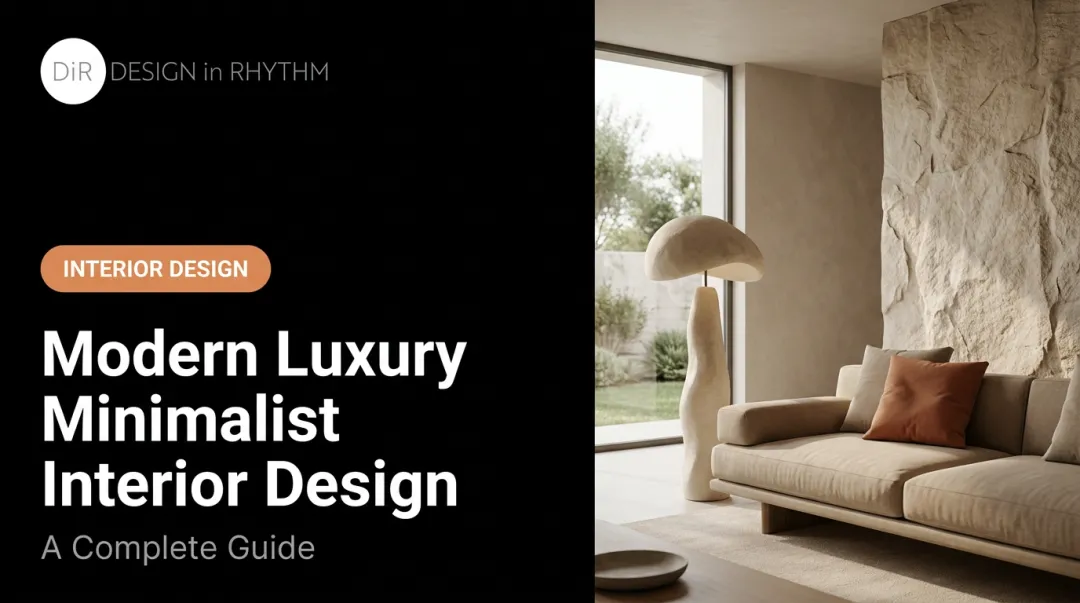
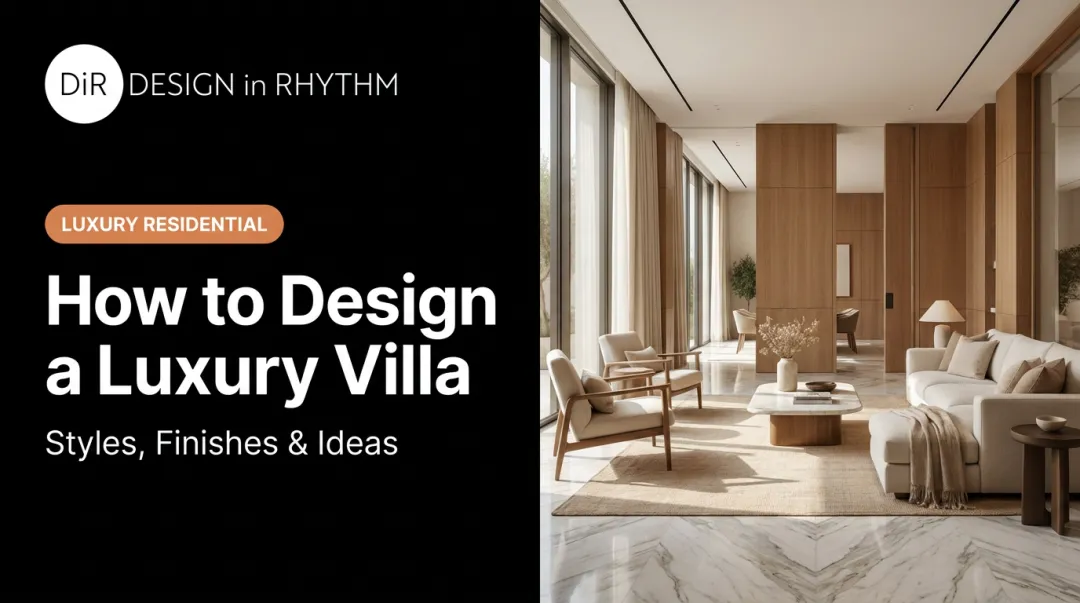
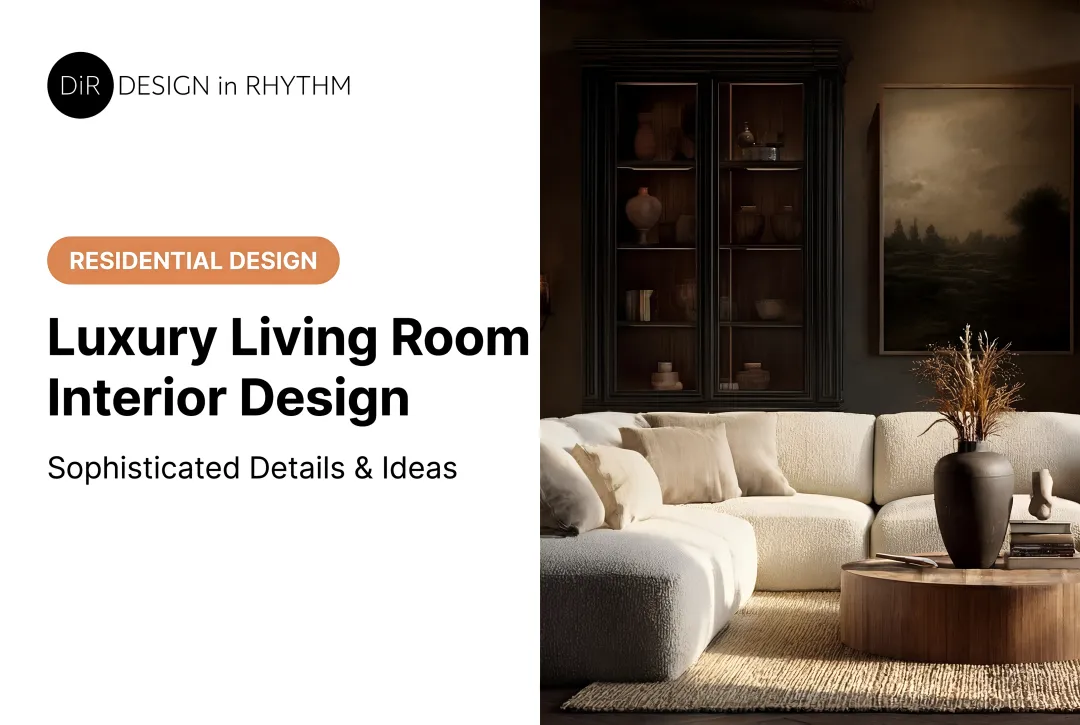
Modern luxury interior design exists to resolve exactly that tension. The distinction isn't budget — it's intention. Clean lines, premium materials, and spatial decisions that serve the person living or working there, not just the photographer shooting it.
This guide covers what modern luxury design actually means, its core elements, practical tips for achieving it, and the trends shaping premium residential and hospitality interiors right now. Whether you're planning a full home renovation, developing a boutique hotel, or simply want your space to reflect a more considered aesthetic — this guide gives you a clear place to begin.
Key Takeaways
- Modern luxury is defined by understatement, not excess — clean lines, premium materials, and restrained color palettes over ornate decoration
- Layered lighting and high-quality tactile materials are the non-negotiable foundations
- Every element should earn its place — curated, functional, and visually intentional
- Current trends favor warm minimalism, biophilic integration, and Japandi-influenced restraint
- The most distinctive spaces rely on trade-only materials and custom makers that mainstream retail simply doesn't carry
What Is Modern Luxury Interior Design?
Modern luxury design is what happens when contemporary minimalism meets genuinely high-end craftsmanship. It draws selectively from Bauhaus geometry and Art Deco precision — Dezeen documents current interiors using Bauhaus tubular forms, while Elle Decor identifies a 2025 Art Deco revival built on sharp lines and high contrast. Neither movement dominates; both inform.
How It Differs from Traditional Luxury
Traditional luxury announces itself. It relies on ornate embellishment, gilded surfaces, heavy drapery, and maximalist layering as signals of wealth. Modern luxury communicates through restraint instead.
As designer Keren Richter noted in Architectural Digest's 2023 coverage of "white chocolate minimalism": when color and pattern recede, materiality, scale, proportion, and the hand element become paramount. That shift in emphasis is the defining characteristic of modern luxury.
Why It Works Across Contexts
Modern luxury functions as a neutral, timeless canvas. It doesn't demand a particular cultural identity or historical period — instead, it creates the conditions for personal storytelling through curated art, bespoke furniture, and objects that carry genuine meaning.
That adaptability has made it the preferred aesthetic for premium residences and boutique hospitality projects. A well-executed modern luxury space can shift from intimate to expansive, minimal to warm, without losing its identity.
Key Elements of Modern Luxury Design
Clean Lines and Defined Silhouettes
The architectural backbone of modern luxury is geometry and precision. Furniture has clearly defined silhouettes, storage is integrated and streamlined, and window treatments are carefully tailored to the proportions of the room.
Nothing should feel accidental. Every edge, every void, every sight line is considered.
Premium Materials and Texture Layering
That precision extends to material selection — what surfaces and finishes occupy a space matters as much as how they're arranged. The material palette of modern luxury typically includes:
- Stone — marble, travertine, Pietra Leccese, and dramatic stone varieties with visible veining
- Hardwood — darker wood tones beyond standard oak, used for floors, wall panels, and furniture
- Textiles — velvet, leather, and boucle-adjacent upholstery for tactile depth
- Metals — brushed brass, aged bronze, and matte black hardware as accents
The skill lies in layering warm and cool finishes — warm wood against cool stone, for instance — so the space gains tactile richness without visual clutter. A modernized townhouse that pairs custom marble mantels with leather and velvet upholstery is doing exactly this: each material earns its place by contrasting with something adjacent.
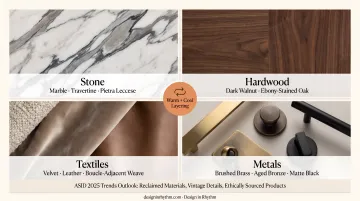
Sustainable material sourcing is increasingly part of this conversation. ASID's 2025 Trends Outlook identifies growing demand for reclaimed materials, vintage details, and ethically sourced products — choices that add provenance and authenticity alongside their environmental value.
Restrained, Sophisticated Color Palettes
The color logic of modern luxury works in three layers:
- Neutral base — ivory, taupe, warm gray, or soft white anchors the room
- Deep accents — emerald, navy, burgundy, or charcoal introduced through soft furnishings and art
- Metallic punctuation — gold, bronze, or matte black in hardware and fixtures, used sparingly
The neutral base does the heavy lifting — it's what prevents the deeper accents from tipping into drama and keeps the room feeling composed rather than decorated.
Intentional, Layered Lighting
Lighting in modern luxury design is both functional and atmospheric. A well-designed scheme layers three types:
- Ambient — overall illumination setting the room's base tone
- Task — focused light for specific activities
- Accent — directional light highlighting art, materials, or architectural features
Fixtures themselves become sculptural elements — an oversized pendant above a dining table, a pair of wall sconces flanking a fireplace. Dimmers allow the atmosphere to shift from daytime clarity to evening intimacy.
On the technical side, Lutron advises specifying fixtures with CRI above 90 to ensure materials appear accurate and flattering — a detail that separates thoughtful lighting design from adequate lighting.
Natural light is equally important. Open floor plans, strategically placed mirrors, and light-reflective wall finishes all amplify the richness of premium materials throughout the day.
Spatial Generosity and Hidden Storage
Modern luxury spaces give each element room to breathe. Generous negative space around furniture and objects is itself a form of luxury — expansiveness signals intention, and intention signals investment.
Bespoke built-in storage makes this possible: floating sideboards, floor-to-ceiling cabinetry, and backlit glass cabinets that eliminate visual clutter without sacrificing function. The curated quality of the room stays intact because nothing essential is left lying around.
Top Tips for Achieving a Modern Luxury Interior
Invest in Fewer, Higher-Quality Pieces
One statement sofa, one sculptural coffee table, one piece of original art will outperform a room full of average-quality items every time. Select pieces with architectural interest and materials that age well — because restraint, done right, reads as confidence.
Use Walls as a Design Element
Limewash plaster, luxury wallpaper, and textured finishes transform walls from backdrops into design moments. A single feature wall — marble-effect, deep-toned, or heavily textured — often carries more visual impact than four uniformly painted ones.
Create one deliberate focal point per room. Identify the room's anchor — a fireplace, a large-scale artwork, a statement light fixture — and design everything else to frame it. This is how professional designers establish visual hierarchy and spatial rhythm.
Source bespoke and trade-exclusive pieces. The difference between a "nice" luxury interior and a truly exceptional one often comes down to access. Custom furniture from skilled artisans, exclusive stone varieties, and handcrafted accent pieces unavailable through mainstream retail are what give a space a character that can't be replicated. Design in Rhythm's decade-long vendor and artisan network gives clients access to the same makers and materials that top design firms rely on — unavailable through mainstream retail.
Once the individual pieces are right, the next challenge is making the whole feel intentional.
Maintain visual continuity across rooms. A unified interior language doesn't mean identical palettes throughout — it means shared lines, material echoes, and tonal relationships that create coherent flow. Rooms should stimulate curiosity as you move through them while feeling unmistakably part of the same story.
Current Trends in Modern Luxury Interior Design
Warm Minimalism Replacing Cold Modernism
The stark, chrome-and-concrete minimalism of the 2010s is giving way to something warmer and more tactile. Architectural Digest documents a shift toward creamy neutrals, darker woods, dramatic stone, patina, and artisanal work — what it calls "white chocolate minimalism." Think aged brass hardware, warm-toned plaster walls, natural linen, and earthy stone rather than the cool precision of earlier modernist interiors.
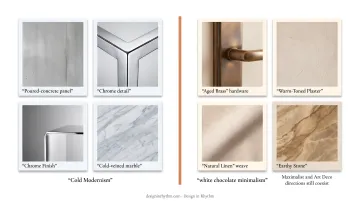
This isn't a wholesale replacement — maximalist and Art Deco-influenced directions coexist with this warmer strand. But the appetite for spaces that feel grounded and human rather than clinical is clearly growing.
Biophilic Design as a Luxury Standard
Nature integration has moved from trend to expectation in premium spaces. A study of 428 guests across 12 biophilic hotels found that design quality directly predicted guest well-being (β=0.479, p<0.001), which in turn predicted willingness to pay more.
In practice, biophilic luxury looks like:
- Large-format windows framing outdoor views
- Living walls and mature indoor plants
- Natural stone with visible veining used as a primary surface material
- Organic textures — jute, raw wood, handmade ceramics — throughout the material palette
Japandi and Cross-Cultural Minimalism
The fusion of Japanese wabi-sabi aesthetics with Scandinavian hygge has produced one of the most coherent and widely adopted luxury design languages of recent years. Architectural Digest defines Japandi as calm, organic interiors built on neutral palettes, high-quality natural materials, simplicity, and craftsmanship — values that align almost exactly with modern luxury's core principles.
Key identifiers in a Japandi-influenced luxury space:
- Muted, earthy color palettes without stark contrast
- Low-profile furniture with clean, considered silhouettes
- Handcrafted ceramics and raw texture combinations
- Generous negative space treated as a design element in itself
Sustainability and Provenance as Luxury Markers
Clients commissioning premium spaces now expect an ethical story alongside an aesthetic one. ASID's guidance identifies growing demand for toxin-free materials, vintage and handcrafted details, reuse, and ethical sourcing — with designers partnering with suppliers who can evidence fair labor, FSC-certified timber, and environmentally responsible production.
Reclaimed wood, responsibly sourced stone, and locally made artisan pieces don't just reduce environmental impact. They add provenance and authenticity that mass-produced materials simply cannot replicate — which is why the most sought-after luxury projects today tend to lead with material origin as a selling point, not an afterthought.
Modern Luxury Design in Hospitality and Residential Spaces
Modern luxury has always had a productive relationship with boutique hospitality. Well-traveled homeowners increasingly want their residences to evoke the curated, intentional quality of a high-end boutique hotel — where every room feels designed for the person inhabiting it, not assembled from a generic showroom.
At a 2023 Hotel Designs roundtable, designer Natalia Miyar noted that guests want "the comfort and luxury that you have at home in a hotel," while David Collins Studio connected residential hospitality to materiality and the hand-feel of fabrics.
The convergence runs in both directions: boutique hotels borrowing from residential warmth, luxury homes incorporating hotel-derived elements like bespoke bars and private retreat spaces.
The key differences in application:
| Context | Primary Emphasis |
|---|---|
| Residential | Personal storytelling, lived-in comfort, lifestyle-specific function |
| Boutique Hospitality | Guest journey, brand perception, spatial experience from arrival onward |
Navigating that convergence well requires a process built around the specific space, not a universal template. Design in Rhythm's portfolio spans both worlds: from the Magic Castle Hotel and Hollywood Hills Hotel to private residences across Los Angeles, Santa Barbara, and New Jersey. The firm's discovery process uncovers the authentic narrative of each space before a single product is sourced, ensuring the design serves a specific story rather than a generic version of luxury.
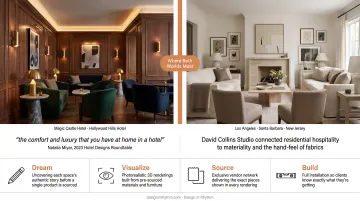
The process itself matters as much as the outcome. Photorealistic 3D renderings built from pre-sourced actual materials and furniture — not placeholder visuals — give clients an exact preview of their finished space before any purchasing begins. Clients know exactly what they're getting before a single purchase order is placed.
Frequently Asked Questions
What is modern luxury interior design?
Modern luxury design blends contemporary minimalism with high-end craftsmanship: clean lines, premium materials, and deliberate understatement over ornate excess. It prioritizes materiality, spatial proportion, and livability over decorative volume.
What is the 3-5-7 rule in interior design?
The 3-5-7 rule groups decorative objects in odd numbers at varying heights to create visual balance and rhythm. In modern luxury interiors, it means fewer, higher-quality pieces placed with intention rather than filling every surface.
What are the latest trends in luxury interiors?
Warm minimalism, biophilic integration, Japandi-influenced aesthetics, and sustainability-led sourcing are the defining directions right now. Collectively, they mark a shift away from cold opulence toward spaces that feel grounded, natural, and personally meaningful.
How do I choose a color palette for a modern luxury interior?
Start with a neutral base — warm whites, taupes, or soft grays. Add depth through rich accent hues like deep navy, emerald, or burgundy in soft furnishings and art. Use metallic finishes in gold, bronze, or matte black sparingly as high-end punctuation.
What is the difference between modern and contemporary luxury interior design?
"Modern" refers to a historical aesthetic rooted in Bauhaus and mid-20th century principles, while "contemporary" describes what's current and still evolving. In practice, "modern luxury" blends clean-lined modernist sensibility with today's premium materials and comfort standards.
Do I need a professional interior designer for a modern luxury project?
Professional expertise significantly changes the outcome. Trade-exclusive sourcing, pre-verified product selections, and coordinated project management from concept through installation are all difficult to replicate independently. That integrated process is what separates a truly refined space from a well-intentioned one.