Most homeowners start with a Pinterest board and a folder of magazine tear-outs. Then reality hits: how do you turn forty saved images into one cohesive, buildable vision? That gap between inspiration and execution is where most villa projects stall.
This guide walks through the design elements that actually matter, the styles worth considering, how layouts typically flow, and what it takes to bring the whole thing to life without losing your mind in the process.
Key Takeaways
- Proportion and spatial generosity matter more than square footage
- Indoor-outdoor flow and wellness amenities are now standard expectations
- Personalization through real discovery beats a "luxurious-looking" home
- Material consistency creates the cohesion buyers notice but can't name
- Getting a project-specific estimate beats generic per-square-foot guesses
What Are the Key Elements of Luxury Villa Design?
Luxury design starts with balance, not budget. Every furnishing and architectural detail should match the scale of the room and the rhythm of daily life in it.
A living room stuffed with oversized furniture feels cramped, no matter how expensive the pieces are, while one left mostly empty feels cold. Designers use lighting to visually scale down large volumes and layer rugs to anchor proportion, often the difference between a space that reads as "big" versus one that reads as "grand."
Space, Materials, and Flow
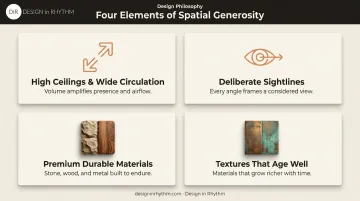
Spatial generosity signals luxury in ways square footage alone can't capture:
- Higher ceilings and wider circulation paths between rooms
- Deliberate sightlines that pull your eye toward a view or focal point
- Premium, durable materials like natural stone, hardwood, and metal accents that reward close inspection
- Textures that age well instead of just looking new on day one
Indoor-outdoor integration has shifted from nice-to-have to expected. Seventy-two percent of designers report growing client demand for stronger connections to nature, according to Architectural Digest's 2025 Outdoor Forecast. Pocket doors, multi-slide glass walls, and covered terraces aren't add-ons anymore; they're part of the floor plan from day one.
Personalization Is the Real Differentiator
Here's the part most homeowners underestimate: a house can check every box on a "luxury features" list and still feel generic. What actually separates a truly custom villa from a showroom copy is a thorough discovery process—understanding a client's routines, quirks, and taste before a single material gets specified.
At Design in Rhythm, this discovery-led approach shapes everything downstream. Founder Jon Wheat's process focuses on client detail and lifestyle before design decisions get made, giving clients room to express their own opinions rather than inheriting someone else's aesthetic. That's the difference between a villa that photographs well and one that actually fits how you live.
Popular Luxury Villa Design Styles to Consider
There's no single "luxury style." The right one depends on your villa's location, its architectural bones, and your own personality. A beachfront Santa Barbara property calling for stucco arches would feel wrong transplanted onto a formal East Coast estate, and vice versa.
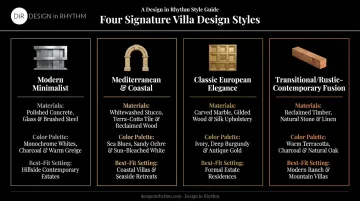
Modern Minimalist
Clean lines, neutral palettes, and a quality-over-quantity approach to furnishing define this style. Rooms breathe. Architecture and natural light do the heavy lifting instead of ornamentation. Furniture pieces are fewer but more considered—each one earning its place rather than filling a corner.
Mediterranean & Coastal Luxury
Bright, sun-washed interiors with arched doorways, textured plaster walls, and a strong indoor-outdoor flow define this look. It suits beachfront or warm-climate villas particularly well, where terracotta tones and natural materials echo the landscape outside.
Classic European Elegance
Symmetry, crown moldings, coffered ceilings, and rich textiles create a formal, timeless sophistication. This style leans traditional, drawing on 18th-century European influence reinterpreted for modern living, with proportions that feel deliberate rather than accidental.
Transitional & Rustic-Contemporary Fusion
This blends rustic textures (exposed wood beams, natural stone) with modern minimalism for something warm yet refined. It's become one of the more requested combinations for clients who want character without formality.
A quick note on trends: Luxury style preferences shift year to year and vary by region. Check a current trend report specific to your market before committing to a direction. What's dominant in Los Angeles this year may look different in Boston or Washington, DC.
What Is the Typical Layout of a Luxury Villa?
Luxury villa layouts prioritize zoning: separating social, private, and service areas so noise, traffic, and privacy don't compete against each other. Getting this wrong is one of the most common regrets homeowners voice after move-in.
Social & Entertaining Zones
Double-height foyers and open-plan living/dining areas set the tone the moment guests step inside. This is the villa's social hub, designed to make a first impression and host everything from quiet dinners to larger gatherings.
That same entertaining focus carries into the kitchen. Kitchens are designed for workflow efficiency and hosting simultaneously, with a strong visual connection to adjacent dining and living zones. Many high-end kitchens now include a dual layout: a front "show" kitchen for guests and a back prep kitchen for the real work.
Private & Retreat Zones
Homeowners now expect a spacious primary suite with an ensuite bath, a walk-in closet, and often a private sitting or reading nook tucked away from the rest of the home. This retreat-within-a-retreat approach carries through to guest suites, which increasingly mirror hotel-style privacy: their own bath, their own entrance if possible.
Wellness spaces have become their own category too. The global sauna market is projected to reach $4.6 billion, according to Architectural Digest's reporting on the sauna boom, reflecting how mainstream cold plunge and heat therapy circuits have become in high-end residential design.
Outdoor Living Areas
Terraces, pools, and outdoor kitchens function as true extensions of the interior layout, not afterthoughts bolted on once the house plans are finalized. The best villa layouts treat the transition from indoor to outdoor as one continuous design decision.
Choosing Premium Finishes & Materials
Finishes are where a villa either coheres or falls apart room to room. Natural stone, hardwood, and hand-selected hardware (door pulls, faucets, lighting) define the tactile quality of a space. Consistency matters here more than most homeowners realize: mismatched hardware finishes between the kitchen and primary bath is a small detail that reads as a big inconsistency.
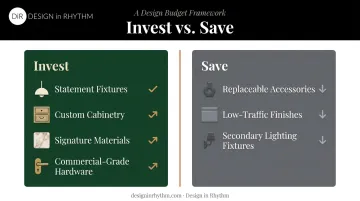
Where to invest versus where to save:
- Invest in statement fixtures, custom cabinetry, and signature materials that anchor a room's identity
- Invest in hardware rated to commercial-grade durability standards for high-traffic areas
- Save on replaceable accessories and finishes in low-traffic zones like guest powder rooms
- Save on secondary lighting fixtures that don't serve as focal points
There's another layer that separates a designer showroom look from an authentically custom villa: access. Trade-only materials, the kind unavailable through mainstream retailers, are often what makes a space feel one-of-a-kind rather than assembled from the same catalog everyone else is shopping.
Firms with established artisan and vendor relationships, built over years rather than months, tend to add the most tangible value to a villa's finish selections.
Design in Rhythm's decade of industry relationships, for example, opens access to vendors and custom furniture makers that most homeowners can't reach on their own.
Must-Have Features That Elevate Luxury Living
A handful of features have moved from optional to expected in high-end villas over the past few years.
Smart home automation now covers lighting, climate, security, and entertainment as a single integrated system rather than disconnected gadgets. Twenty-five percent of luxury consumers name security and lighting automation as top priorities, per Coldwell Banker Global Luxury's Trend Report. Professionally installed systems tend to hold up better than piecemeal consumer setups.
Beyond automation, wellness-driven additions have become their own design category:
- Spa-style primary bathrooms with soaking tubs and dedicated steam showers
- Saunas and cold plunge setups, often paired in a single wellness circuit
- Dedicated fitness or yoga spaces with natural light and ventilation built in
Alongside wellness upgrades, statement architectural touches create the moments people remember after they leave:
- Art walls with gallery-style lighting
- Sculptural light fixtures as functional art
- Double-height spaces that reframe how a room feels at different times of day
Bringing Your Vision to Life: Working With a Design Team
Budgets for luxury villa design swing widely based on square footage, material selection, and how much customization is involved. A generic per-square-foot number floating around online won't reflect what your specific project actually costs. Getting a project-specific estimate is the only way to plan realistically.
The DIY Coordination Trap
Once the budget is set, the real challenge becomes execution. Homeowners who try to coordinate a villa project themselves usually hit the same wall: chasing vendors for delivery updates and managing contractors on separate schedules. Too often, the rendering they approved doesn't match what actually shows up on-site. Materials get substituted. Timelines slip. Nobody's tracking the whole picture.
Why an Integrated Approach Solves This
Design in Rhythm built its process around eliminating that gap entirely. The firm **sources every product before creating a single rendering**, meaning the 3D visualization a client approves reflects the exact materials, furniture, and finishes that will actually arrive—not a placeholder or a close approximation.
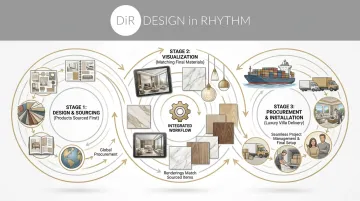
That's backed by:
- A single point of contact managing the project from kickoff through final walkthrough
- An exclusive network of vendors and artisans across Los Angeles, Santa Barbara, Boston, Las Vegas, Washington DC, and New Jersey
- Full procurement and logistics management, so clients coordinate zero vendors directly
David Chen's role as Procurement & Logistics Manager illustrates this: staging and delivery sequencing are handled as one unified operation, and nothing ships until the space is ready to receive it. The result: what clients see in renderings is exactly what gets installed.
Frequently Asked Questions
What are key elements of villa design?
Spatial balance and proportion, premium durable materials, seamless indoor-outdoor connection, and genuine personalization form the core pillars. The best villas combine all four rather than leaning on one alone.
What are popular luxury home styles?
Modern minimalist, Mediterranean/coastal, classic European elegance, and transitional rustic-contemporary fusion are the leading directions right now. The right choice depends on location and personal taste.
What is the typical villa layout?
Most layouts include a grand entrance, an open living/dining zone, and a private primary suite. Guest suites offer hotel-style privacy, while outdoor living areas serve as true extensions of the home.
How much does it cost to design a luxury villa?
Costs vary widely based on square footage, material choices, and customization level. Rather than relying on generic per-square-foot figures, request a tailored project estimate for accurate planning.
What materials are best for luxury villa finishes?
Natural stone, hardwood, and premium metal hardware offer the best combination of durability and timeless appeal. Consistency across rooms matters as much as the materials themselves.
How long does it take to design and furnish a luxury villa?
Timelines depend heavily on scope, customization, and how quickly approvals happen at each stage. An integrated design-to-installation process helps avoid the delays that come from juggling vendors separately.