Introduction
A guest walks into a hotel lobby and decides, almost instantly, whether the property matches the price tag. That snap judgment shapes everything from how long they stay to whether they book again.
Interior design directly affects a hotel, restaurant, or bar's bottom line. Experience-driven spending in the US has outpaced the broader economy for years. Food service and accommodations posted annual growth rates of 6.4% and 6.0%, according to McKinsey's analysis of consumer spending patterns.
Yet many owners still treat interior design as decoration, something to finalize after the "real" decisions are made. This guide breaks down what hospitality interior design actually involves and why it drives revenue. You'll also see the trends reshaping guest expectations and how a design-to-installation process, like Design in Rhythm's, turns concepts into finished spaces.
Key Takeaways
- Hospitality interior design directly drives guest satisfaction and revenue
- Comfort, layered lighting, flow, and durable materials form every successful space
- Biophilic design, smart technology, and flexible spaces redefine guest expectations
- Discovery, sourcing, and installation must work as one coordinated process
- Choose a partner with hospitality-specific experience and true end-to-end capability
What Is Hospitality Interior Design?
Hospitality interior design is a specialized discipline built around service-driven environments: boutique hotels, restaurants, bars, cafés, spas, and lounges. Unlike residential design, it has to work for hundreds of strangers a day, not one family.
Every choice, from a banquette's upholstery to a hallway's width, gets filtered through a single question: does this help the business run better while making guests feel something specific?
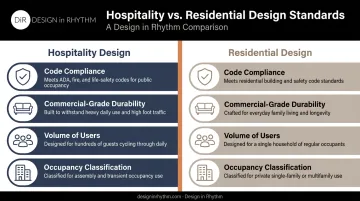
Hospitality vs. Residential Design: Key Differences
The gap between designing a home and designing a hotel comes down to scale and accountability:
- Code compliance: Hospitality spaces must meet ADA, fire, and life-safety codes that residential projects rarely encounter
- Commercial-grade durability: Furniture and finishes need to survive daily heavy use, not occasional wear
- Volume of users: A restaurant designer plans for hundreds of daily guests; a residential designer plans for one household
- Occupancy classification: Building codes classify hotels and restaurants differently from private homes, which affects everything from egress width to material ratings
The Role of a Hospitality Interior Designer
A hospitality designer handles space planning, FF&E (furniture, fixtures, equipment) selection, lighting design, and material specification, all tailored to how guests actually move through a space. They also coordinate with architects, contractors, and ownership teams to keep the aesthetic vision aligned with operational reality and budget.
In boutique hospitality specifically, the job is to translate an owner's brand story into something guests remember, rather than replicate a generic template.
Design in Rhythm's work on St Felix Las Vegas shows this in practice. Rather than defaulting to a generic "luxury Vegas lounge" look, the team anchored the main lounge around a bold "Sin City" wall art installation, paired with red leather benches and tufted sofas that reflect the city's own energy.
Types of Spaces Hospitality Designers Work On
Design priorities shift depending on the venue:
- Hotel lobbies prioritize first impressions and clear wayfinding from entry to check-in
- Bars and lounges prioritize ambiance, acoustics, and social flow, as seen in St Felix's purple-lit bar and marbled counter
- Restaurants balance dining atmosphere with operational efficiency for staff, evident in projects like Kitchen 24 and Tribute
- Spas and cafés lean into calm, sensory-focused environments built for relaxation
Why Interior Design Is Critical to Hospitality Business Success
Guests form impressions of a space fast, and research backs this up. A peer-reviewed hotel-lobby study found that color, lighting, and style shaped overall guest impressions, with color carrying the strongest effect. That's a lobby's job: telegraph the brand before a single word is exchanged.
Design communicates identity without saying anything. A warm-toned, wood-and-stone bar counter like the one at Kitchen 24 says "contemporary but approachable." Crimson wallpaper and purple accent lighting, as used at St Felix, say "luxury nightlife." Neither needs a sign to explain itself.
The Psychological and Financial Case
Lighting, color, and openness affect guest mood in measurable ways. Research on biophilic design, greenery, and natural light connects these elements to lower stress responses, which matters directly for hospitality spaces where relaxation is part of the product.
The financial case backs this up:
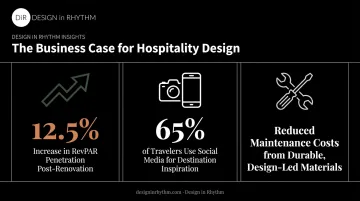
- HVS found a 12.5% increase in RevPAR penetration in the first year after renovation versus a competitive set, though this reflects broad capital upgrades rather than design alone
- 65% of travelers who use social media turn to it for destination inspiration, per Expedia Group, so a visually distinctive space earns free exposure with every guest photo
- Durable, well-specified materials cut long-term maintenance costs and reduce staff time spent managing wear in high-traffic zones
Design in Rhythm builds this thinking into every boutique hotel project, treating operational flow and durability as core requirements alongside guest experience and brand identity.
Core Elements and Emerging Trends in Hospitality Interior Design
Fundamental Design Principles
Four elements show up in every successful hospitality project:
- Comfort and functionality: Ergonomic furniture and quality materials that hold up under daily guest use
- Layered lighting: Ambient, task, and accent lighting shape mood and highlight brand-defining features, as seen in St Felix's moody bar lighting and purple-lit back-bar display
- Spatial flow: Layouts that guide guests intuitively from entry to check-in, dining, or amenity areas without confusion
- Material selection: Commercial-grade, low-maintenance finishes that still align visually with the brand
Emerging Trends Reshaping the Industry
Guest expectations keep shifting, pushing these fundamentals in new directions. A few trends stand out:
- Sustainability and biophilic design: 51% of travelers say they'd pay more for sustainable lodging, and 45% actively want lodging with a lower environmental footprint, per Expedia's sustainable travel study
- Technology integration: Smart room controls, mobile check-in, and personalized lighting or temperature settings are moving from novelty to expectation
- Flexible, multi-use spaces: Lobbies doubling as co-working or event venues, a model Accor and The Hoxton have both piloted at scale
- Local culture and artisanship: Regional art and craftsmanship create a sense of place guests remember, like St Felix's "Sin City" wall art and Las Vegas-inspired palette that turn geography into brand identity
From Concept to Reality: The End-to-End Design Process
A great rendering means nothing if what gets installed doesn't match it. That gap is where most hospitality projects lose time and money.
Closing that gap starts with discovery, before any design work begins. Uncovering a client's true vision and brand story ensures the finished space feels authentically theirs, not a version of someone else's aesthetic.
From there, the sequence matters more than most owners realize:
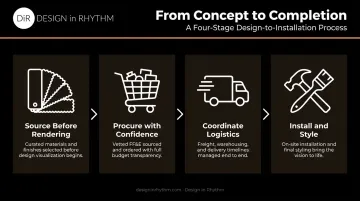
- Source before rendering: Confirming every actual product before finalizing photorealistic renderings means what a client approves is exactly what gets installed
- Procure with confidence: Once renderings are approved, purchasing and vendor contracts move forward without last-minute sourcing scrambles
- Coordinate logistics as one operation: Deliveries get sequenced to arrive when the site is ready, not before, preventing storage bottlenecks common in hotel and restaurant buildouts
- Install and style: Every fixture, finish, and furniture piece is placed with intention, matching the approved vision
Design in Rhythm built this exact model, drawing on a decade-built network of vendors, artisans, and custom furniture makers. The result: projects like Magic Castle Hotel and Hollywood Hills Hotel, where design, procurement, logistics, and installation all run under one coordinated team.
How to Choose the Right Hospitality Interior Design Partner
Not every design firm can handle hospitality's demands. A few things separate the ones that can:
- Hospitality-specific experience: Look for a track record across boutique hotels, restaurants, and bars, not just residential portfolios. Operational and code requirements differ between hospitality and residential projects
- Trade-exclusive vendor access: Firms with relationships to artisan workshops and custom furniture makers unavailable through mainstream retail can deliver spaces that don't look like everyone else's
- Single point of contact: Integrated project management from concept through installation reduces the coordination issues, delays, and budget overruns that come from juggling multiple vendors and contractors
If you're evaluating partners for an upcoming boutique hotel, restaurant, or bar project, scheduling a consultation is the fastest way to see how a firm's process actually holds up against your specific goals.
Frequently Asked Questions
What does a hospitality interior designer do?
A hospitality interior designer handles space planning, FF&E selection, lighting, and material specification tailored to guest flow. They also collaborate with architects and ownership teams to align design with brand and operational goals.
What are the 7 pillars of hospitality?
EHL Hospitality Business School's concept-design framework lists Story, Staff, Space, Identity, Services, Content, and Channels. Interior design directly influences several of these, especially Space, Identity, and Story.
What's the difference between hospitality and residential interior design?
Hospitality design must meet commercial code requirements, use higher-durability materials, and serve hundreds of daily users. Residential design centers on personal taste for a single household with far fewer regulatory constraints.
How long does a typical hospitality interior design project take?
Boutique hotel and restaurant projects typically span 4 to 9 months from initial discovery through final installation, depending on scope and custom fabrication lead times. A consultation provides a project-specific timeline based on your space and finish level.
How much does hospitality interior design cost?
Cost depends on project scope, finish level, and location. Full design-to-installation projects reflect the custom fabrication, procurement, and installation work involved, so a consultation is recommended for an accurate quote.
Why is lighting considered one of the most important elements in hospitality design?
Layered lighting, meaning ambient, task, and accent, shapes guest mood and highlights brand-defining features like a signature bar display. It's often the single element that most influences a space's perceived quality.