
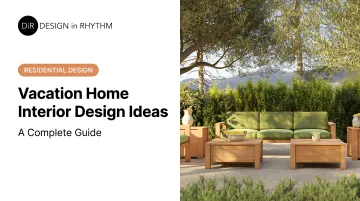
This guide covers what makes vacation home design fundamentally different, how to choose the right creative approach, which materials actually hold up over time, and the mistakes that consistently undermine even beautiful spaces.
Key Takeaways
- Vacation homes should be designed around a specific experience — relaxation, entertaining, or escape — before any furniture or finish is chosen
- Material durability is a design decision: coastal, mountain, and desert environments each demand different choices — sealed stone, weathered oak, performance fabrics — matched to the climate
- Open-concept layouts serve multi-user households better than compartmentalized spaces
- For rental properties, layered lighting, performance fabrics, and built-in storage aren't optional — they directly affect guest reviews
- The 3-5-7 rule and varied furniture heights prevent the flat, showroom look guests notice immediately
How Vacation Home Design Differs from Your Primary Residence
Primary residences evolve organically. Furniture gets swapped when it wears out, colors get repainted when you're tired of them, and the space gradually reflects how your life actually unfolds. Vacation homes don't have that luxury.
A vacation property is judged in its first few minutes. Research from a 2022 peer-reviewed experiment found that participants formed consistent spatial preferences after just 200 milliseconds of exposure — roughly one visual fixation. The impression your space creates isn't something guests consciously deliberate; it's immediate and largely emotional.
That immediacy means every design decision — materials, layout, lighting — needs to earn its place before the first guest arrives.
Materials That Hold Up to Heavy Use
Unlike a primary home where wear accumulates slowly under one household, a vacation property faces intense, varied use — beach sand, mountain mud, extended family gatherings, rental guests rotating every few days. FEMA notes that coastal buildings require significantly more maintenance than inland construction, with corrosion especially pronounced within 3,000 feet of the ocean.
Materials native to the surrounding region perform better because they were built for those conditions:
- Coastal: weathered wood shingles, fiber cement, concrete, and naturally durable or preservative-treated wood
- Mountain: stone, brick, and moisture-managed masonry that can withstand freeze-thaw cycles
- Desert: stucco, metal siding, and materials that handle UV intensity and temperature swings
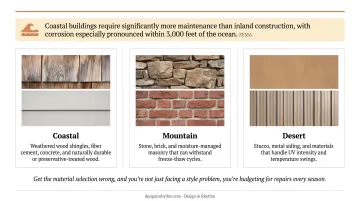
Get the material selection wrong, and you're not just facing a style problem — you're budgeting for repairs every season.
Design for Flexibility and Multiple Users
Vacation homes typically serve several modes across the year: quiet weekends for two, extended family visits, and short-term rental rotations. The layout needs to accommodate all three without feeling like a compromise in any.
Open-concept living, dining, and kitchen arrangements work particularly well here — they encourage social connection when the house is full and still feel comfortable for a couple on a quiet weekend.
Compartmentalized floor plans that work fine in a primary home can feel fragmented and small when a vacation house is at capacity.
Choose a Design Approach That Fits Your Vision
Most vacation homes fall into one of two design modes: letting the location lead, or letting your lifestyle lead. The best spaces do both — but starting with a clear intention is what separates a memorable retreat from a generic rental that looks like every other coastal or mountain property on the market.
Let the Location Lead
Location-responsive design draws from the surrounding landscape, regional culture, and local architecture — but not in a literal or kitschy way. A beach house doesn't need driftwood on every surface. It might need a moody abstract in blues and grays that evoke open water, metallic accents that catch light the way the ocean does, or a sculptural chandelier that references the drama of the coastline without announcing it.
Sourcing art and handcrafted objects from regional artisans adds something mass-produced décor simply can't: a genuine sense of place. Guests notice it, comment on it, and remember it. That quality of memory drives repeat bookings and word-of-mouth in ways that a well-chosen sofa never will.
Let Your Lifestyle Lead
If the vacation home is primarily for personal use, design it around how you actually unwind — not how you imagine someone might.
- Entertainers need a beverage station, open kitchen built for multiple cooks, and direct indoor-outdoor access
- Retreaters need quiet reading nooks, built-in bookshelves, and a view worth sitting still for
- Mixed-use owners need both — which requires deliberate zoning within the layout
This is where working with a designer who asks the right questions before making any selections pays off. Design in Rhythm's discovery process is built to surface what clients actually want from a space — including the kind of vacation home experience they're after — before any direction is set. Most clients leave that conversation with clarity they didn't arrive with.
Select Materials Built to Endure Without Sacrificing Style
Material selection is one of the most consequential decisions in vacation home design. Beautiful materials that can't withstand UV exposure, humidity swings, salty air, or high-traffic use will cost significantly more in replacement and maintenance than durable alternatives chosen from the start.
Indoor Materials: Comfort That Can Take a Hit
Upholstered furniture in shared living spaces should use performance fabrics — solution-dyed acrylic, Crypton, or similar — that resist staining, fading, and moisture without looking or feeling institutional. Sunbrella's solution-dyed fibers carry a 5-year upholstery warranty for UV, fade, stain, water, mold, and mildew resistance. Crypton fabrics are tested against staining and odor penetration and are PFAS-free.
For woven indoor upholstery, the Association for Contract Textiles identifies 30,000 Wyzenbeek double rubs as the threshold for commercial high-traffic spaces — the right standard to apply in vacation rental environments too.
A few additional indoor material principles:
- Mix vintage or antique furniture with newer pieces for character and patina — it prevents the "furnished from one catalog" look guests recognize immediately
- High-quality mattresses and blackout curtains in bedrooms are non-negotiable for guest comfort and review scores
- Avoid natural fiber baskets and wicker storage in high-humidity environments — they mold
Outdoor selections demand an equally deliberate approach, where climate does most of the damage.
Outdoor and Climate-Specific Considerations
For outdoor furniture, prioritize:
- Aluminum — Brown Jordan backs cast and extruded frames with a 15-year structural warranty; performs well in most climates
- Teak — Naturally weather-resistant; ages to silver-gray without treatment and suits coastal or humid environments particularly well
- Resin wicker — More durable than natural wicker; resists moisture and UV reliably across most climates
Avoid materials that crack in temperature swings, fade in direct sun, or trap moisture. Exterior finishes — stone, fiber cement, brick, metal siding — chosen to match the local climate reduce interior maintenance as much as curb appeal.
Color, Lighting, and Texture: Setting the Atmosphere
Color choice should reflect the emotional experience the space is meant to deliver. A 2018 university study found blue was the most preferred interior color at 34.7%, with calm mood significantly associated with that preference. Cross-cultural research confirms blue is consistently rated highly across demographic groups — which is part of why it works so reliably in vacation settings.
Practical color guidance by location:
- Coastal: Blues, blue-greens, and soft whites — balanced with natural textures to avoid flatness
- Mountain/Woodland: Warm naturals, forest greens, and deep earth tones
- Desert: Terracotta, sand, and warm ochre — with enough contrast to avoid feeling washed out
Layered Lighting
Overhead lighting alone creates a flat, institutional atmosphere. Vacation homes need all three layers:
- Ambient lighting sets the mood for living areas — keep it soft and dimmable
- Task lighting serves kitchens, reading chairs, and workspaces with targeted, functional output
- Accent lighting in bedrooms, outdoor areas, and around art creates warmth and visual depth
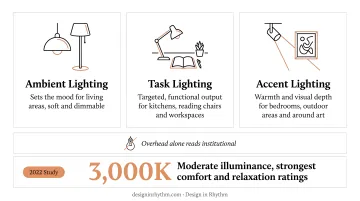
A 2022 controlled study found that 3,000K light at moderate illuminance produced the strongest comfort and relaxation evaluations among tested conditions. Warm, dimmable lighting in living and sleeping spaces isn't just an aesthetic preference; it's backed by how light physically affects comfort perception.
Texture
Texture is often what separates a room that looks finished from one that just looks furnished. A single-material room — all linen, or all wood — reads as flat regardless of quality. Mixing materials (linen, stone, wood grain, woven textiles, glass) across a single space adds tactile depth. Throw pillows and blankets are the easiest way to layer texture and color without any permanent changes — swap them seasonally and the room reads differently each time.
Design Mistakes to Avoid in Your Vacation Home
Three errors consistently derail vacation home projects — and all three are avoidable with the right process from the start.
Transplanting your primary residence aesthetic. Vacation homes serve a different emotional purpose and often a different climate. What feels grounded and personal in your everyday home can read as heavy or mismatched here.
Ignoring scale. Furniture at uniform heights, art hung too small, or rooms where every object sits at the same proportion create flat, forgettable spaces. The 3-5-7 rule (grouping decorative objects in odd numbers at varied heights) creates visual rhythm that makes a room feel designed rather than assembled.
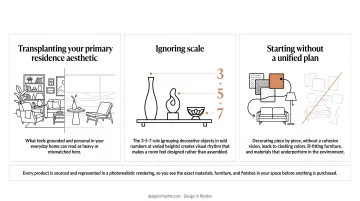
Starting without a unified plan. Decorating piece by piece — without a cohesive vision — leads to clashing colors, ill-fitting furniture, and materials that underperform in the environment. Correcting these mistakes after the fact costs more than getting it right upfront.
That last mistake is where most budgets quietly collapse. Design in Rhythm addresses it directly: every product is sourced before a rendering is created, so clients see an exact depiction of the actual materials, furniture, and finishes before a single purchase is committed. There's no gap between what was imagined and what gets installed.
Frequently Asked Questions
How do you make your house feel like a vacation home?
Introduce a clear sense of place through location-inspired art and color, reduce surface clutter, and layer texture through quality soft furnishings. Prioritizing leisure over daily routine — a great view, a comfortable reading spot, a well-stocked bar — makes the biggest difference.
What are common mistakes to avoid when decorating a coastal living room?
Avoid leaning too literal with nautical motifs — anchors and rope everywhere dates quickly. Choose materials rated for humidity and salt air, and layer blues with neutrals and natural textures. Without contrast, an all-blue coastal room reads flat rather than evocative.
What is the 3-5-7 rule in interior design?
The 3-5-7 rule recommends grouping decorative objects in odd numbers — three, five, or seven — at varied heights to create visual rhythm and asymmetrical balance. It prevents the static look of evenly matched pairs or uniformly sized arrangements throughout a space.
What is the best color palette for a vacation home?
Color should follow the location: blues and coastal tones for beach properties, warm naturals and forest greens for mountain homes, terracotta and sand for desert spaces. Keep the base neutral enough to layer accent colors through textiles and art, which you can swap seasonally without repainting.
Should I hire an interior designer for my vacation home?
The value of a designer is particularly high for vacation homes, where material durability, climate knowledge, and vendor access matter as much as aesthetics. A well-designed property pays back through rental revenue, property value, and the quality of time spent there.
What materials work best for beach or mountain vacation homes?
Choose performance fabrics indoors (solution-dyed acrylic or Crypton) and weather-resistant outdoor furniture — aluminum, teak, or resin wicker with UV-resistant fabrics. Materials native to the region, like weathered wood for coastal properties or stone for mountain homes, tend to perform and age best in their own environment.