Yet many homeowners default to matching showroom sets. Six chairs, one table, zero personality. The result feels expensive but forgettable.
This guide curates 50+ design ideas across classic, modern, eclectic, and sensory-driven categories. Whether you gravitate toward Old-World grandeur or minimalist restraint, you'll find a starting point for a dining room that actually tells your story.
Key Takeaways
- Luxury dining design pairs timeless craftsmanship with light, texture, and material contrast
- Classic, modern, eclectic, and nature-inspired styles can all read as high-end with intention
- Statement lighting and opulent materials offer the fastest path to elevation
- Bespoke, personal touches separate true luxury from a matched showroom set
Timeless Elegance: Classic & Traditional Luxury Dining Styles
Classic luxury has staying power because it's built on proportion and craftsmanship, not trend cycles. Here are three enduring approaches.
Traditional & Old-World Grandeur
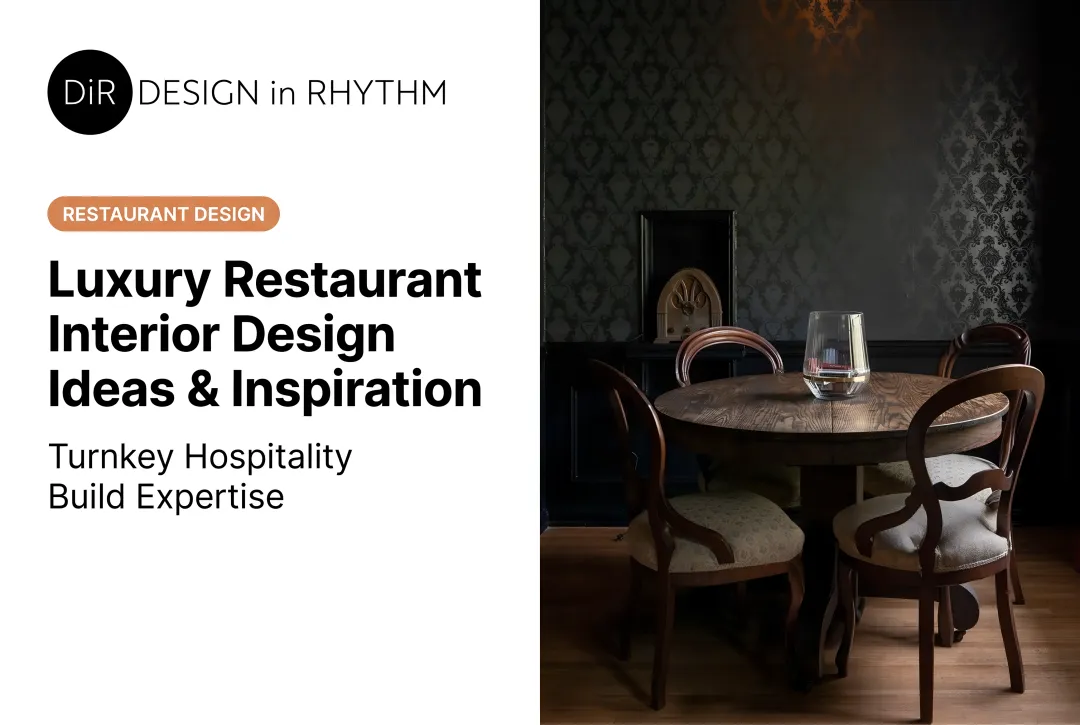
Traditional design relies on symmetry and order above almost everything else. Architectural Digest defines the style through European 18th- and 19th-century influence, dark rich wood finishes, and classic chandeliers, citing an English Regency mahogany table as a foundational piece.
Bring this to life with:
- Symmetrical furniture arrangements framing the table on all sides
- Rich mahogany or richly stained wood, paired with tufted or carved upholstered chairs
- Layered lighting: a crystal chandelier overhead, brass or gold sconces along the walls
- Heirloom china cabinets, carved sideboards, and framed landscape artwork for narrative depth
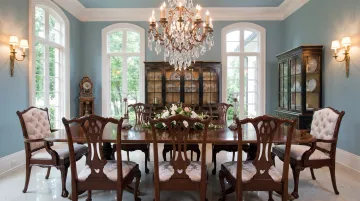
The goal is a room that feels regal yet genuinely comfortable to linger in, not stiff or staged for show.
Art Deco Glamour
Art Deco traces back to a specific moment: the V&A dates the movement to the 1920s and 1930s, pinpointing the 1925 Exposition Internationale des Arts Décoratifs in Paris as its defining showcase.
For a dining room, that translates to:
- Bold geometric patterns (zigzags, chevrons) on rugs, walls, or ceiling details
- Glossy mahogany or ebony furniture set against chrome or brass fixtures
- Statement mirrors and sculptural sconces that catch and throw light
It's a dramatic, confident look. Don't soften it with too many neutral pieces.
French Country & European Estate Elegance
This style trades polish for patina, favoring distressed finishes, fabric-clad walls, and vintage furnishings that feel collected across generations rather than delivered from a warehouse.
- Muted, weathered wood tones instead of high-gloss finishes
- Tapestry-inspired textiles on chairs, drapery, or table runners
- Antique-style chandeliers and hutches that suggest a countryside estate
Done well, it creates conservatory-like warmth. Done poorly, it reads as "shabby" instead of "chic." The difference is quality over quantity.
Modern Sophistication: Contemporary & Glam Luxury Dining Ideas
Modern luxury doesn't need ornamentation to feel expensive; it needs precision, restraint, and the right material choices.
Modern Glamour & Understated Opulence
This approach pairs velvet upholstery with marble-and-brass tables and sculptural pendant lighting. The effect is intimate rather than loud.
- Velvet dining chairs in jewel tones or soft neutrals
- A marble tabletop with brass or bronze legs as the room's anchor
- Mixed metals (gold, chrome, bronze) as accent hardware, not a single dominant finish
One well-placed crystal fixture can shift a casual room to formal in seconds, often serving as the room's only ornamental flourish.
Minimalist Luxury
Minimalism proves that luxury lives in fewer, better choices rather than added ornamentation.
- Clean-lined tables in glass, stone, or light wood
- A restrained neutral palette with generous negative space
- One sculptural statement piece, a striking pendant or art installation, as the room's sole focal point
The discipline here is resisting the urge to add "just one more" decorative object. Minimalist rooms live or die on restraint.
Mid-Century Modern Revival
Mid-century design brings nostalgia into a high-end context through organic curves and honest materials. Knoll dates Eero Saarinen's Pedestal Collection to 1958, created specifically to eliminate the "slum of legs" cluttering traditional table-and-chair arrangements.
Key elements to pull in:
- Walnut or teak wood tones with visible grain
- Geometric chair silhouettes, often with a single pedestal base
- Vintage-inspired pieces paired with modern lighting for a collected-over-time feel
This style rewards mixing eras, pairing a 1958-inspired table with a contemporary chandelier for a look that feels curated, not dated.
Eclectic & Nature-Inspired Luxury Dining Ideas
Eclectic design is the riskiest style to execute and the most rewarding when it works. The secret is curated intentionality, not clutter.
- Mixing eras deliberately: a vintage farmhouse table paired with mid-century chairs, unified by one consistent material or color
- Adding rustic-luxe touches: reclaimed wood tables under refined chandeliers, softened with plush linens for an elevated cabin feel
- Embracing coastal, organic luxury: natural materials, soft ocean-inspired palettes, and abundant natural light for a serene retreat atmosphere
The common thread across all three is contrast handled with a steady hand. A raw wood table needs a polished light fixture to feel intentional rather than accidental. The result should feel lived-in, not staged, no matter which combination you choose.
The Sensory Elements That Make a Dining Room a True "Feast"
This is where design moves from "nice" to "unforgettable." Sensory details are what people remember after they leave the table.
Statement Lighting as Art
An oversized chandelier or sculptural pendant cluster does double duty: it's functional and it's the room's centerpiece. In our hospitality projects, we always scale the fixture to the table itself, center it above the tabletop rather than the room's midpoint, and add a dimmer for flexibility. One recent restaurant install paired a brass pendant cluster with a 14-foot communal table, dimmed low enough that guests lingered long after dessert. A warm, candlelike glow beats harsh overhead brightness every time.
Materials & Textures
Luxury is tactile as much as visual. Mix:
- Polished marble for cool, reflective surfaces
- Brushed brass for warmth and shine
- Hand-painted tiles for unexpected pattern
- Plush velvet for softness underfoot or under hand
The contrast between hard and soft, matte and glossy, is what makes a room feel rich rather than flat.
Color & Atmosphere
Bold jewel tones—sapphire, emerald, deep gold—create drama and make a room feel cocooning. Soft neutrals do the opposite: they calm the space and let materials speak louder than color.
Table Shape & Scale
Beyond color, the shape of the table itself sets the tone for the room. A round table softens the space and suits intimate gatherings, while a long rectangular table signals formality and grand-scale entertaining. Neither is more luxurious than the other. It depends on how you actually want to use the room.
Bringing Your Luxury Dining Room Vision to Life
Real luxury comes from bespoke furniture, curated objets, and hand-selected tableware that couldn't belong to anyone else's home, not a matching showroom set.
That's harder to pull off alone. Sourcing custom pieces, coordinating vendors, and making sure everything arrives on time and intact is a full-time job most homeowners don't have time for.
This is where an integrated design partner like Design in Rhythm takes that off your plate. The process runs through four phases: Dream, Visualize, Source, and Build.
- Dream: A discovery conversation uncovers how the space will actually be lived in, how often you entertain, and how many people you typically host
- Visualize: Every product is sourced before renderings are created, so the photorealistic visuals you approve are exactly what gets installed, not an approximation
- Source: An exclusive vendor network, built over more than a decade, provides access to premium furniture, lighting, and artisan pieces unavailable through mainstream retailers
- Build: One team manages contractors, deliveries, and installation, so you're never chasing vendors or managing timelines yourself

That kind of support doesn't replace your vision, though. A practical way to start on your own: identify one sensory anchor, a lighting fixture, a table, or a standout material, and build the rest of the room's palette around it.
Frequently Asked Questions
What makes a dining room look luxurious?
Luxury comes from quality materials, intentional lighting, a strong focal furniture piece, and personalized details, rather than any single trend or purchase.
What is the best color for a luxury dining room?
Both bold jewel tones and soft neutrals work well. The right choice depends on whether you want dramatic entertaining energy or a calm, intimate dining mood.
How many people should a luxury dining table seat?
This depends on your lifestyle and space. Round tables suit intimate gatherings of 4-6, while long tables handle formal dinners of 8 or more comfortably.
What lighting is best for a formal luxury dining room?
A statement chandelier or sculptural pendant should anchor the space, layered with dimmable sconces or accent lighting for flexibility between casual and formal moods.
How can I make a small dining room feel luxurious?
Mirrors and reflective surfaces add depth in tighter spaces, especially paired with lighter tones. A scaled-down statement light fixture still gives the room a focal point without overwhelming it.
What is the difference between formal and casual luxury dining design?
Formal design relies on symmetry, rich materials, and a dedicated room, built for a more elevated dining ritual. Casual luxury softens that with comfortable textures and open-plan connectivity to everyday living.