That creates a real problem for homeowners, developers, and hospitality operators. Portfolios all start to look the same, pricing structures are murky, and it's hard to know which firm will manage a project smoothly versus one that leaves you chasing vendors for months.
This guide breaks down the interior designers worth knowing in 2026, what makes each one different, and how to pick the right fit for your residential or hospitality project.
Key Takeaways
- The 2026 design market rewards personalization and integrated, trade-only project management
- This list spans residential specialists, boutique hospitality experts, and top hotel brand firms
- Selection criteria include portfolio range, client feedback, and full-service capability
- Design in Rhythm stands out by uniting design, procurement, and logistics into one process
Overview of the Interior Design Industry in 2026
"Interior design" now covers a lot more ground than picking paint colors. Today's practice spans residential remodels, boutique hospitality, restaurants and bars, and commercial common areas, often within a single firm's portfolio.
That broader scope reflects a market in real expansion, fueled by two parallel trends: a boom in boutique hotel development and a wave of luxury home renovations among buyers who'd rather upgrade than move. The U.S. interior design industry reflects that momentum directly, with market size projected at $26.4 billion in 2026, according to IBISWorld's industry analysis.
This growth means more firms competing for attention, and not all of them can back up their portfolios with reliable execution. The following list highlights designers recognized for craftsmanship, client trust, and the ability to actually finish what they start.
Top Interior Designers To Know In 2026
Every firm on this list was evaluated against the same yardstick: portfolio strength across project types, service model, market reputation, and demonstrated client trust.
Design in Rhythm
Founded by Jon Wheat, known industry-wide as a musician-turned-designer, Design in Rhythm is an end-to-end design firm specializing in boutique hotels, restaurants, bars, and luxury residential remodels. The firm operates across Los Angeles, Santa Barbara, Boston, Las Vegas, Washington DC, and New Jersey.
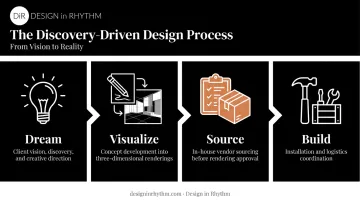
What separates Design in Rhythm from a typical design studio is the sequencing of its process. Most firms build renderings first and hope the products exist to match them later.
Design in Rhythm sources every product, from custom furniture to lighting and finishes, before a single rendering is created. What clients approve is exactly what gets installed, not an approximation.
That's backed by a decade-plus exclusive vendor network and a single integrated team that handles design, procurement, and logistics under one roof. No vendor coordination headaches, no chasing contractors.
| Category | Details |
|---|---|
| Specialty | Boutique hospitality (under 100 rooms), restaurants, bars, and full home remodels |
| Signature Process | Discovery-driven design ("Dream, Visualize, Source, Build") with in-house procurement and logistics |
| Notable Clients/Partners | Wood Partners, Gensler, Patagonia, Sonos |
Champalimaud Design
Founded by Alexandra Champalimaud, this New York-based studio built its reputation on transformative, story-driven interiors for luxury hospitality and high-end residences, with a team of around 50 professionals contributing to each project.
The firm's philosophy treats every space as a narrative. Champalimaud's designers lean into texture, color, and emotional resonance rather than trend-chasing, which is why their hospitality work tends to feel personal instead of formulaic.
Their Art Deco-inspired work on The Kent, a luxury condominium tower in New York City, is a good example of that approach applied to residential space.
| Category | Details |
|---|---|
| Specialty | Luxury hospitality and high-end residential |
| Signature Style | Poetic, emotionally expressive interiors using texture and color |
| Notable Recognition | Alexandra Champalimaud, Interior Design Hall of Fame inductee (2012) |
Kelly Wearstler
Kelly Wearstler has run her Los Angeles studio since 1995, building a name on bold, maximalist interiors that blur the line between residential comfort and hospitality drama.
Her signature move is what she calls "mixology and materiality": pairing contemporary pieces with vintage finds, raw textures against refined surfaces. It reads as eclectic but never chaotic.
Her residential client list has included names like Cameron Diaz and Gwen Stefani. In 2022, Architectural Digest named her to the AD100 Hall of Fame, crediting her with introducing a distinct glamorous aesthetic to Los Angeles design.
| Category | Details |
|---|---|
| Specialty | Residential and boutique hotel interiors |
| Signature Style | Eclectic textures, vibrant color, modern-vintage fusion |
| Notable Recognition | AD100 2023 Hall of Fame inductee |
Nina Magon
Nina Magon Studio is headquartered in Houston, with additional presence in Miami and several other markets. Magon has built a national profile around glamorous, high-end residential and hospitality interiors.
Her signature look leans bold and modern-glam: rich materials, confident color, and layouts designed for how people actually entertain.
That combination of style and livability has earned steady media attention, including Magon's win of Interior Design's 2026 HiP Award for Designer's Own Firm Leader, one of the industry's more competitive individual honors.
| Category | Details |
|---|---|
| Specialty | Residential and hospitality |
| Signature Style | Bold, glamorous, modern flair |
| Notable Recognition | 2026 HiP Award, Designer's Own Firm Leader |
Bilkey Llinas Design
With offices in West Palm Beach and Hong Kong, Bilkey Llinas Design has spent years pushing boundaries in luxury hospitality, working directly with internationally recognized hotel groups.
The firm's strength is designing spaces that work equally well for business travelers and leisure guests, a balance that's harder to strike than it sounds. Their portfolio includes the interior design for the Four Seasons Hangzhou at West Lake, a project that put their global hospitality credentials on full display.
| Category | Details |
|---|---|
| Specialty | Luxury hospitality design |
| Signature Style | Innovative concepts appealing to both business and leisure travelers |
| Notable Clients | Four Seasons (Hangzhou at West Lake) |
How We Chose the Best Interior Designers
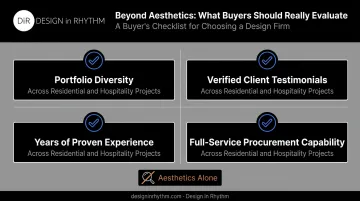
Ranking design firms isn't just about scrolling through pretty portfolio photos. We looked at portfolio diversity across residential and hospitality work, client testimonials, years of experience, and whether a firm offers true end-to-end service, not just design consultation.
The most common mistake buyers make is choosing a designer based on aesthetics alone. A gorgeous portfolio tells you nothing about:
- Whether the firm manages procurement or just hands you a shopping list
- How transparent their timeline communication stays once a contract is signed
- What happens when vendor reliability causes project delays
Those factors translate directly into business outcomes. A firm with tight project management delivers fewer delays, better cost control, and a finished space that actually matches what you approved, not a rough approximation of it.
Conclusion
There's no single "best" interior designer. The right fit depends on whichever firm's process, communication style, and vendor access line up with your specific project and goals.
Before signing anything, ask direct questions about procurement transparency, realistic timelines, and what past clients experienced once the contract was signed.
If you're planning a boutique hospitality project or a full residential remodel, Design in Rhythm's discovery process starts with a free consultation. There's no portfolio pitch — just a real conversation about what you're trying to build.
Frequently Asked Questions
How do I choose the best interior designer for my project?
Look for portfolio work that matches your project type, plus a communication style you're comfortable with. Confirm they have real procurement and project management capabilities, and ask how they've handled past delays before you sign anything.
How much does it cost to hire a top interior designer in 2026?
Costs vary widely by scope, whether it's a single room or a full hospitality build-out, and typically combine design fees with a separate furnishing and procurement budget. Ask upfront how fees are structured: flat rate, hourly, or cost-plus.
What's the difference between an interior designer and an interior decorator?
Interior designers handle space planning, code compliance, and structural input alongside aesthetics. Decorators focus on surface-level styling, like color schemes and decorative accessories, without construction or layout involvement.
Do interior designers work on hospitality and commercial spaces, not just homes?
Yes. Many top firms, including Design in Rhythm, specialize in boutique hotels, restaurants, and bars alongside residential projects, often using the same discovery-driven process across both.
How long does a full interior design project typically take?
Discovery and hiring take a few weeks, and schematic design and development run roughly 2 to 6 weeks each, according to Architectural Digest. Procurement for custom pieces can add 12 weeks or more depending on complexity.
What should I look for in an interior designer's portfolio?
Look for variety across project types and consistent quality, not just a few standout photos. Confirm evidence of full execution too, meaning finished installations rather than renderings that never got built.