When that coordination breaks down, the results are predictable: scope creep, mismatched expectations, vendor delays, and budgets that balloon past what anyone signed off on. 26% of homeowners who renovated in 2024 named staying on budget their top challenge, according to the 2025 Houzz & Home Study.
This guide breaks down what design project management actually means, the four phases every project moves through, the roles that make it work, and how to evaluate a partner who can manage the whole thing without you having to babysit ten different vendors.
Key Takeaways
- Design project management coordinates the physical space, not just the creative vision behind it
- The lifecycle runs through four phases: discovery, design development, procurement, and installation
- Interior and hospitality projects demand creative talent and operational discipline in equal measure
- Choose a partner who sources products before finalizing renderings and offers one point of contact
What Is Design Project Management?
Design project management is the coordinated process of planning, sourcing, and executing a physical space, from the first concept sketch to the last piece of furniture placed on-site. It's a different animal than managing a digital or marketing design project.
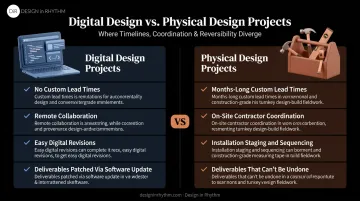
A logo redesign doesn't have a 12-week lead time on custom upholstery. A marketing campaign doesn't need a general contractor on-site. Physical design work carries constraints that software projects simply don't face:
- Custom lead times that can stretch for months on artisan-made pieces
- Contractor coordination across trades like electrical, millwork, and flooring
- On-site installation logistics, including staging, sequencing, and access windows
- Physical deliverables that can't be patched with a software update if something's wrong
The Core Tension: Vision vs. Constraints
Every design project management approach has to balance two forces pulling in opposite directions. On one side sits the creative vision, the client's story, the aesthetic that makes a space feel like theirs. On the other sits hard deadlines, fixed budgets, and vendor availability that doesn't care how beautiful the mood board is.
This discipline shows up anywhere a physical space needs to come together on schedule: boutique hotels, restaurants and bars, full home remodels, and commercial common areas all require it.
For clients, getting that balance right isn't only about prettier renderings. It's predictability. Clients want to know the budget, timeline, and finished product are locked in before demolition or installation starts, not discovered mid-project.
The data backs up why that matters. Beyond the 26% who struggled with budget, 19% of 2024 renovators cited staying on schedule as a top pain point, per the same Houzz study. Structured project management exists specifically to close that gap between what's promised and what's delivered.
The Design Project Management Lifecycle: From Concept to Installation
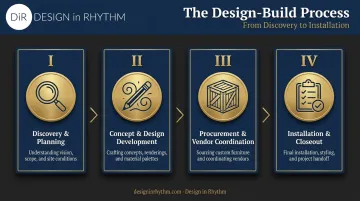
Most professional design projects follow a four-phase framework. Skip a phase, or rush through it to save time, and that's usually where the budget and the timeline both start to slip.
Phase 1: Discovery & Planning
This is where the real work begins, before a single rendering exists. A skilled team interviews the client, walks the physical space, and gathers inspiration and references to uncover the actual vision, which is often different from what the client thought they wanted going in.
For a boutique hotel lobby, that discovery conversation often uncovers a completely different guest experience than the one initially requested.
This phase also locks in:
- Project scope and defined deliverables
- Key milestones and target dates
- Budget parameters, set before design work starts
Skipping this step is one of the fastest routes to scope creep later on.
Phase 2: Concept & Design Development
Discovery insights turn into concept boards, space plans, and photorealistic 3D renderings. This is where the vision starts to feel real.
The critical detail most firms skip: sourcing actual products and materials before finalizing those renderings. When a designer renders a sofa that doesn't exist yet in the exact fabric shown, clients approve something that may never match what actually arrives. Sourcing first means the approved rendering is the final product.
This is the workflow Design in Rhythm builds into every hospitality and residential project, so what clients approve is exactly what gets delivered.
Phase 3: Procurement & Vendor Coordination
Procurement teams source furniture, fixtures, and custom pieces from vetted vendor and artisan networks, then manage purchase orders and lead times that can run for months on custom work.
This phase also covers logistics:
- Shipping coordination across multiple vendors and manufacturers
- Warehousing items until the install space is ready to receive them
- Staging sequencing, so pieces arrive in the order installation actually needs
Product availability ranked as a top concern for 65% of designers, with procurement and delivery timelines close behind at 60%, according to ASID's COVID-19 Pulse Survey. Planning around lead times isn't optional anymore. It's the job.
Phase 4: Installation & Project Closeout
Final installation brings contractors and vendors together on-site, with punch lists and quality checks measured against the original rendering. Nothing gets signed off until it matches what was approved.
For a restaurant launch, that might mean confirming every custom banquette and light fixture is installed exactly as rendered before opening night.
Closeout includes:
- A final client walkthrough
- Documentation of final specs and materials
- Feedback gathering to sharpen the process on future projects
Common Challenges in Design Project Management
Even well-run projects hit friction. What separates a smooth project from a stressful one is how that friction gets handled.
Scope Creep
Client requests evolve. A "quick change" to a fabric or a layout can cascade into weeks of delay if there's no process to catch it. A locked design brief, paired with a formal change-order process, keeps evolving requests from derailing the budget.
Vendor Delays and Supply Chain Disruptions
Custom furniture and fixtures don't ship overnight. Some clients have faced waits of **24 weeks or more for custom sofas** during periods of supply chain disruption, according to ASID's COVID-19 pulse survey on supply chain disruptions. Buffer timelines and backup vendor relationships absorb these delays instead of letting them blow up the schedule.
Misaligned Expectations
When designers, contractors, and clients all communicate separately, small misunderstandings snowball. A single point of contact, who owns communication across every party, prevents the kind of miscommunication that shows up as an expensive change order three weeks later.
Key Roles on a Design Project Management Team
Every well-run project has three roles working in parallel, even if one person occasionally wears more than one hat.
- The designer/creative lead translates client vision into concepts, mood boards, and renderings, keeping the aesthetic cohesive across every room or space
- The procurement and logistics manager oversees vendor sourcing, purchase orders, and shipment sequencing, making sure what's rendered is what actually shows up on-site
- The project lead or single point of contact manages timeline, budget, and communication from kickoff to final walkthrough, so the client isn't stuck coordinating five different people
At Design in Rhythm, this procurement and logistics role shows up clearly in how the firm structures its team. David Chen, the firm's Procurement & Logistics Manager, runs the exclusive vendor and artisan network built over more than a decade. He tracks every item from order to on-site delivery, so nothing ships until the space is ready for it.
Tools, Methodologies, and Best Practices
Methodologies borrowed from software and creative teams (Agile, Kanban, Waterfall) show up in design project management, too. But physical procurement dependencies usually push things toward a more sequential, milestone-driven approach.
The Project Management Institute notes that predictive methods work best when requirements are stable, while adaptive methods suit projects with higher uncertainty. Design work often uses a bit of both.
A few practices consistently separate smooth projects from chaotic ones:
- A centralized system for tracking budgets, approvals, and files across designers, vendors, and clients
- Photorealistic 3D rendering paired with pre-sourced products, which eliminates the gap between what's approved and what's delivered
- Milestone-based approvals, so nothing moves forward without sign-off at each stage
Choosing the Right Design Project Management Partner
Not every design firm operates the same way, and the differences matter once real money and real deadlines are on the table.
Look for a partner that offers:
- An integrated team handling design, procurement, logistics, and installation under one roof, instead of leaving you to coordinate separate designers, vendors, and contractors
- Exclusive trade relationships built over years, giving access to premium materials and custom pieces you won't find at a mainstream retailer
- A discovery-driven process that uncovers your authentic vision rather than handing you a templated design
- Pre-sourced products before renderings, so what you approve is exactly what arrives
Ask any potential partner directly: do you source products before finalizing renderings? The answer tells you a lot about how the rest of the project will go.
Design in Rhythm was built around this integrated model. Over more than a decade, the firm has worked across boutique hotels, restaurants, bars, and residential projects in markets including Los Angeles, Santa Barbara, Boston, Las Vegas, Washington DC, and New Jersey.
One point of contact manages the relationship from the first concept conversation to the final walkthrough. Rather than handing clients off between departments, the same team handles design, sourcing, logistics, and installation as a single operation.

Frequently Asked Questions
What is design project management?
It's the process of planning, sourcing, and executing a design project from concept to completion. For physical spaces like hotels and homes, it also covers procurement, contractor coordination, and installation logistics that digital projects skip.
What are the 5 C's of project management?
There's no single official standard, but the framework commonly referenced groups five priorities: communication, coordination, cooperation, cost control, and client focus. In design work, these translate directly into fewer surprises and tighter budget adherence.
What are the 4 types of project managers?
Practitioners often describe four working styles: traditional/waterfall, agile, hybrid, and technical/expert. Design projects typically lean hybrid, using milestone-based phases for procurement while staying flexible on creative decisions.
How long does a typical design project take from concept to installation?
Timelines vary widely by scope. The 2024 U.S. Houzz & Home Study found kitchen renovations averaged 9.6 months of planning and 5.1 months of building. Procurement and installation sequencing are usually the biggest variables.
What's the difference between an interior designer and a design project manager?
A designer focuses on creative vision, spatial planning, and materials. A project manager owns the timeline, budget, procurement, and vendor coordination. Many firms, including integrated design-build teams, combine both roles under one process.
How much does professional design project management typically cost?
Costs vary based on project scope, scale, and whether a firm bundles design, procurement, and installation into one fee or charges for design services separately. Integrated design-to-installation pricing typically reflects the full scope of coordination involved.