The catch? Turning a vision into a finished, functional space is hard. Owners juggle vendors, chase shipments, and manage contractors, often watching timelines and budgets slip along the way.
This guide walks through the design styles reshaping boutique hospitality, the non-negotiable elements every property needs to get right, practical ideas you can act on now, and what to look for in a design partner who can make sure the finished space actually matches the plan.
Key Takeaways
- Interior design directly boosts guest reviews, repeat stays, and revenue growth
- The best hotel design balances brand identity, guest psychology, and daily operations
- Boutique properties thrive on personalized, story-driven design over safe, generic choices
- An integrated design-procurement-logistics partner cuts risk and keeps renderings true to installation
Why Hotel Interior Design Matters for Owners & Managers
Guests start forming opinions almost immediately. Research on digital environments found that people judge a webpage's visual appeal after just 50 milliseconds of exposure. That study focused on screens, not lobbies, but it shows how fast snap judgments form before anyone consciously evaluates a space.
A hotel lobby works the same way. Guests clock the lighting, the furniture, the smell, and the overall "feel" before a single staff interaction happens.
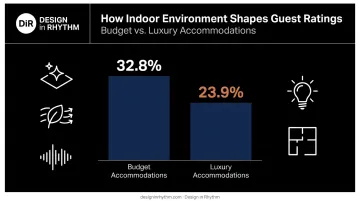
That first read matters more than most owners realize. A 2025 study of guest reviews found that indoor environmental factors, including cleanliness, air quality, acoustics, lighting, and layout, explained 32.8% of ratings in budget accommodations and 23.9% in luxury accommodations. This finding comes from research published in the journal Tourism Management. Design ranks among the top drivers of guest satisfaction, alongside service and amenities.
Design decisions connect directly to these business metrics:
- Online review scores and reputation
- Average daily rate and pricing power
- Direct booking conversion versus OTA dependency
- Repeat-guest rates and word-of-mouth referrals
For independent and boutique properties competing against big chains, distinctive interiors are one of the few advantages that can't be replicated by loyalty points or scale. A generic, safe design blends into the market. A room that tells a story gets photographed, shared, and remembered.
Design also has to work for your staff, not just impress guests. The right choices reduce daily friction across the property:
- Durable, easy-to-clean materials cut maintenance time and housekeeping headaches
- Intuitive layouts speed up service flow and staff movement
- Hard-wearing surfaces, from lobby floors to guestroom carpets, hold up under daily wear instead of fighting against it
Popular Hotel Interior Design Styles to Explore
Choosing a hotel design style means selecting a visual language that fits your brand and your guests. Here are four approaches shaping boutique hospitality right now.
Boutique & Story-Driven Design
This is where sub-100-room independent hotels compete hardest against major chains. Hallmark traits include:
- Distinctive local narratives woven into the space
- Curated art tied to the property's location or history
- Personalized character in each room, rather than repeated templates
A guest should feel like they're staying somewhere specific, not somewhere interchangeable.
Modern & Minimalist Design
Clean lines, integrated smart-room technology, and neutral palettes define this style. Every element serves a function first, and sustainable materials often play a visible role. It's a strong fit for properties targeting business travelers or design-conscious guests who value simplicity over ornamentation.
Luxury & Opulent Design
Bespoke furnishings, premium natural materials, and statement lighting signal indulgence from the moment a guest walks in. Think ornate chandeliers, marble bar tops, and layered textures that reward a slower look. Elevated in-room amenities extend that same feeling into the guestroom.
Eco-Conscious & Biophilic Design
Reclaimed materials, living walls, maximized natural light, and locally sourced furnishings respond directly to rising guest interest in sustainability. Biophilic design goes well beyond a single potted plant near reception. It means orienting rooms toward views, using natural materials throughout, and connecting indoor and outdoor experiences wherever the building allows.
Essential Design Elements & Principles to Get Right
Style choices only work if the underlying fundamentals are solid. A few principles show up in every successful hotel interior, regardless of aesthetic.
Color Psychology and Mood
Color shapes emotional response instantly, often before a guest consciously notices the palette. Studies on hotel room color schemes found that cooler palettes generated more positive attitudes and stronger booking intentions than warmer schemes in guest-facing scenarios. Use that logic deliberately:
- Cooler, muted tones for guestrooms designed for rest and relaxation
- Bolder, warmer tones for social spaces like bars and lobbies where energy matters
- Neutral, warm-toned finishes for corridors and elevator lobbies to ease transitions between public and private areas
Layered Lighting
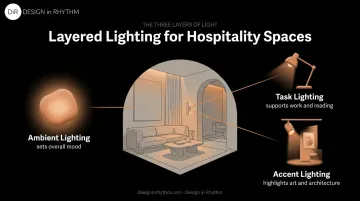
Ambient, task, and accent lighting each serve a distinct purpose. Ambient light sets general mood, task lighting supports reading or working, and accent lighting draws the eye to art or architectural features. Layering all three shifts the guest's experience as they move from lobby to guestroom to dining space.
Space Planning and Function
Every transition, from entrance to elevator or hallway to room, should feel intentional. Clear wayfinding reduces guest frustration and reinforces the sense that the property is well-run, not just well-decorated.
Function matters as much as flow. A striking headboard means nothing if it damages easily. Every fixture and furniture piece needs to satisfy two requirements at once: it has to look right, and it has to hold up to daily guest use.
The unifying thread: all of these elements need to work together under one design narrative. At Design in Rhythm, this idea sits at the center of the founding philosophy: every space should have rhythm, harmony, and a story, tying color, art, and layout into one distinct voice per property rather than a collection of disconnected choices.
Practical Ideas to Elevate Your Hotel's Design
Not every improvement requires a full renovation. A few targeted moves can meaningfully shift guest perception.
Curate a signature moment. One or two statement pieces, such as a bold headboard, custom tile work, or a mural, become the thing guests photograph and remember. Local art tied to your property's story does double duty: it's memorable and it reinforces brand identity.
Add biophilic touches strategically. A statement plant grouping or a living wall softens hard architectural surfaces in lobbies and communal areas without requiring a structural overhaul.
Future-proof the big-ticket items. Flooring, bedding, and fixtures represent your largest investments and the hardest to change later. Choose these for longevity. Save the trend-chasing for smaller, swappable accessories, like pillows and linens, that let you refresh the look affordably as tastes shift.
Why Partnering with a Professional Design Firm Matters
Going it alone on a hotel redesign means becoming, effectively, your own project manager. Owners end up:
- Juggling multiple vendors with different timelines and expectations
- Chasing shipments that arrive late, damaged, or out of sequence
- Managing contractors who point fingers when something goes wrong
The result is often the same story: delays, budget overruns, and a finished space that doesn't quite match what was planned.
An integrated design-procurement-logistics partner removes those failure points by keeping everything under one roof. Design in Rhythm brings:
- Over a decade of boutique hospitality design experience
- An exclusive vendor network built through years of trade relationships
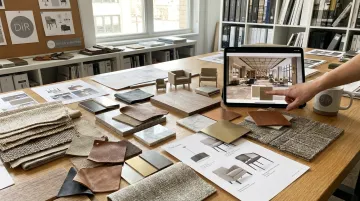
- A discovery-driven process that sources every product before creating renderings, so what owners see is exactly what gets installed
That structure matters. A single point of responsibility simplifies communication and reduces coordination risk. That said, it doesn't guarantee a lower price or faster completion — team experience and clear scope still matter most.
With one point of contact from concept to final walkthrough, owners stay focused on running their property while still ending up with a space that's authentically their brand, not a generic look pulled from a catalog.
Frequently Asked Questions
What are the key elements of hotel interior design?
Color, lighting, space, texture, pattern, line, and form all work together to shape guest perception and functionality. The strongest designs balance these elements with brand identity and day-to-day operational needs.
How much does it cost to redesign a hotel interior?
Costs vary widely based on scope, room count, and material tier — a lobby refresh and a full guestroom overhaul carry very different price tags. Get a tailored quote based on your property's size and design ambition rather than relying on generic per-room estimates.
How do you modernize a hotel without shutting it down?
Phased renovations, timed around off-season periods, let you update the property zone by zone while staying operational. Prioritize high-impact public spaces like the lobby first, since they shape first impressions most.
What makes boutique hotel design different from big hotel chains?
Boutique design is personalized and story-driven, built around a specific narrative and local identity. Chains rely on standardized brand templates designed for consistency across hundreds of properties.
How do I choose the right interior designer for my hotel?
Look for hospitality-specific experience, established vendor relationships, and a process that includes procurement and installation support beyond concept design. A designer who hands off after renderings leaves you managing the riskiest part of the project alone.
How long does a hotel interior design project typically take?
Timelines depend on scope, room count, and how much custom sourcing is involved, running from discovery and design through procurement and installation. Boutique-scale projects generally move faster than large-chain renovations, since fewer rooms and simpler approval chains speed things along.